
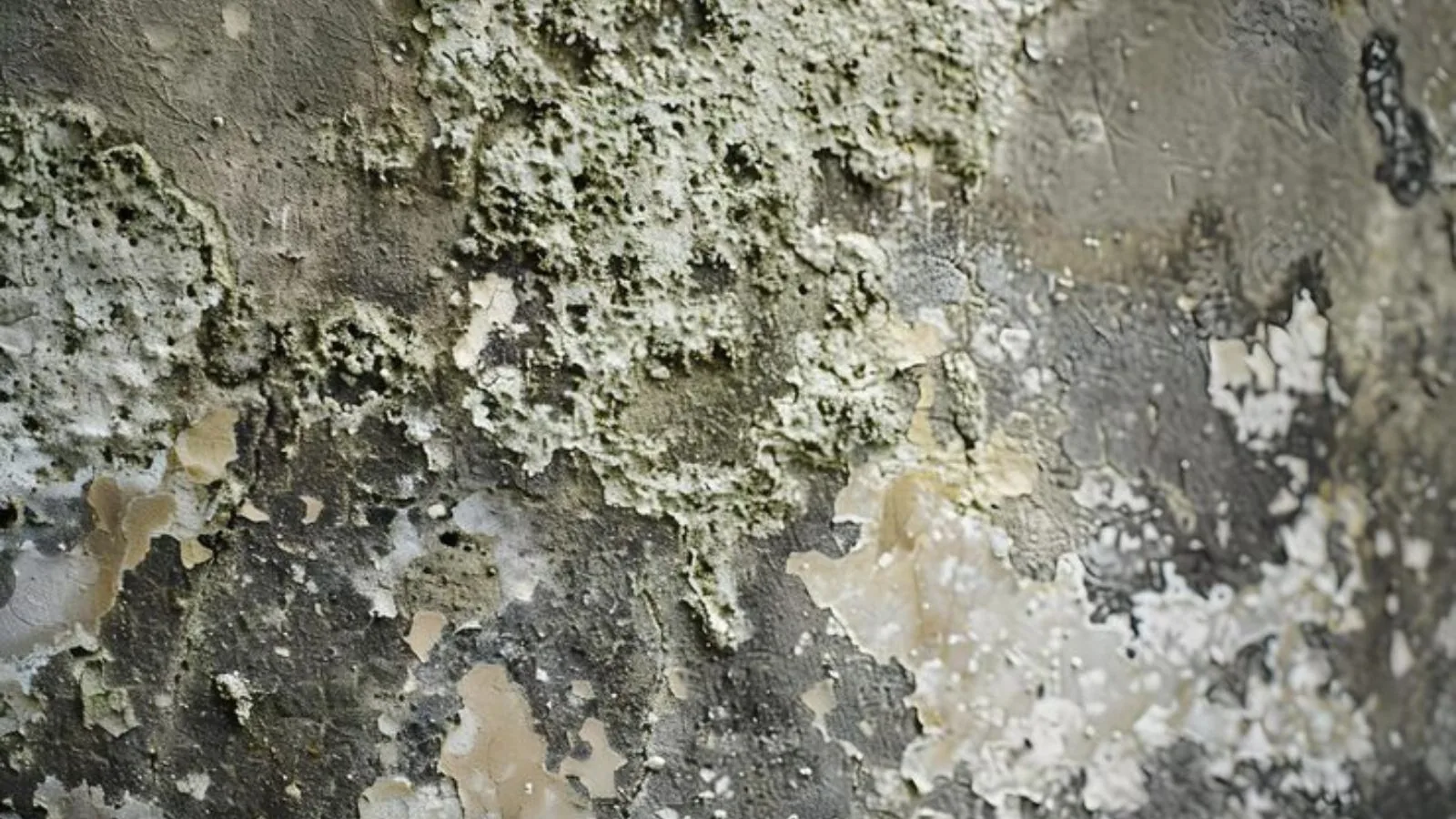
Mold is a fungus that grows on damp organic material, and what it does depends on what it is growing on and how long the moisture stays. In a home, it stains surfaces, breaks down materials like paper and wood, produces a musty smell and tells you that something is staying wet.
This guide covers what mold does to a building and how to read the signs. It does not give medical advice, and health questions belong to a physician.
Mold needs moisture
Mold spores are present in the air nearly everywhere, indoors and out. They stay inactive until they land on something damp that they can feed on. That is why the main question after a water loss is how long materials stayed wet. A wall that was soaked and dried quickly gives mold little chance. A wall that stayed damp for days gives it a place to grow.
Controlling moisture is the real control for mold. A product that kills a patch does not change the conditions that allowed it. If a leak is still running, a humid basement is still humid or a roof is still letting water in, growth returns.
What mold does to materials
| Material | What mold does | What it means for the repair |
|---|---|---|
| Drywall | Feeds on the paper facing and stains it | Affected drywall is cut out and replaced |
| Wood framing | Stains the surface and, if wet long enough, softens it | Cleaned and dried, or replaced if soft |
| Carpet and pad | Grows in the backing and pad, causes odor | Usually removed |
| Insulation | Holds moisture and supports growth | Removed |
| Ceiling tile | Stains and spreads through the porous surface | Removed |
| Painted surfaces | Blisters and stains the paint | Moisture source found before repainting |
Over time, growth that is left in place can weaken wood and ruin finishes. This is slower than a flood, and it is the reason mold is described as a follow-up problem. The first problem is water, and the second is the time it stayed.
Signs that mold may be present
- A musty or earthy odor that is stronger near a wall, closet or basement corner.
- Dark, green, white or fuzzy spots on drywall, ceilings or around windows.
- Paint that bubbles, peels or stains.
- A history of a leak or flood that was not fully dried.
- Condensation on windows or cold walls that keeps returning.
Sometimes the growth is hidden inside a wall, under flooring or above a ceiling, and a smell is the only sign. A moisture meter or thermal camera can show where the damp area is, and opening a small section confirms what is behind it.
Where health questions belong
People often ask what mold does to them. The honest answer is that responses vary from person to person, and that this is a question for a physician, not for a restoration company or a website. If you or someone in your home has symptoms and you suspect mold, talk to a doctor. This guide focuses on the building because that is where the moisture and the materials are, and where the fix has to happen.
What to do when you see it
Find and stop the water. Dry the area. Keep the space closed off and do not sand, scrub dry or blow air across the growth, which can spread spores.
If the growth is on a small hard surface, a damp wipe with detergent can clean it. If it is on drywall, carpet or insulation, or if it covers a large area, have it assessed. The mold remediation page explains the standard process, and the structural drying page explains how the moisture is brought down.
Medford and the New York mold program
In New York, mold work is regulated through the State Department of Labor's mold program, which licenses mold assessors and remediation contractors. The program requires an independent assessment to define the scope of a project, bars the same person from assessing and remediating the same project and calls for a post-remediation assessment. Homeowners working on their own property are a limited exception.
For a Medford homeowner, that means a company that offers both assessment and removal on one project is not following the program's separation. Ask any company for its license and check the department's page. Medford is in Suffolk County, and the program applies statewide.
Mold commonly follows a hidden leak. The basement water damage page explains why basements are prone to it, and the ceiling water damage page covers growth above a stained ceiling. These situations come up in Holtsville and Yaphank in the same way as in Medford.
What does mold do FAQ
Does mold always mean a big problem?
No. A small spot on a hard surface is a cleaning job. Growth on porous materials or over a large area needs assessment, and the moisture source always needs fixing.
Can mold damage the structure of a house?
If it is left in place and the wood stays wet for a long time, it can soften and weaken materials. Quick drying prevents most of that.
Who decides if mold is a health concern?
A physician. This site does not give medical advice.
How does New York handle mold projects?
The Department of Labor's mold program licenses assessors and remediators, requires an independent assessment and calls for a post-remediation check. Ask any company for its license.
Can I check for mold myself?
You can look for visible growth and a musty smell. Hidden mold needs moisture readings and sometimes an opening in the wall.