
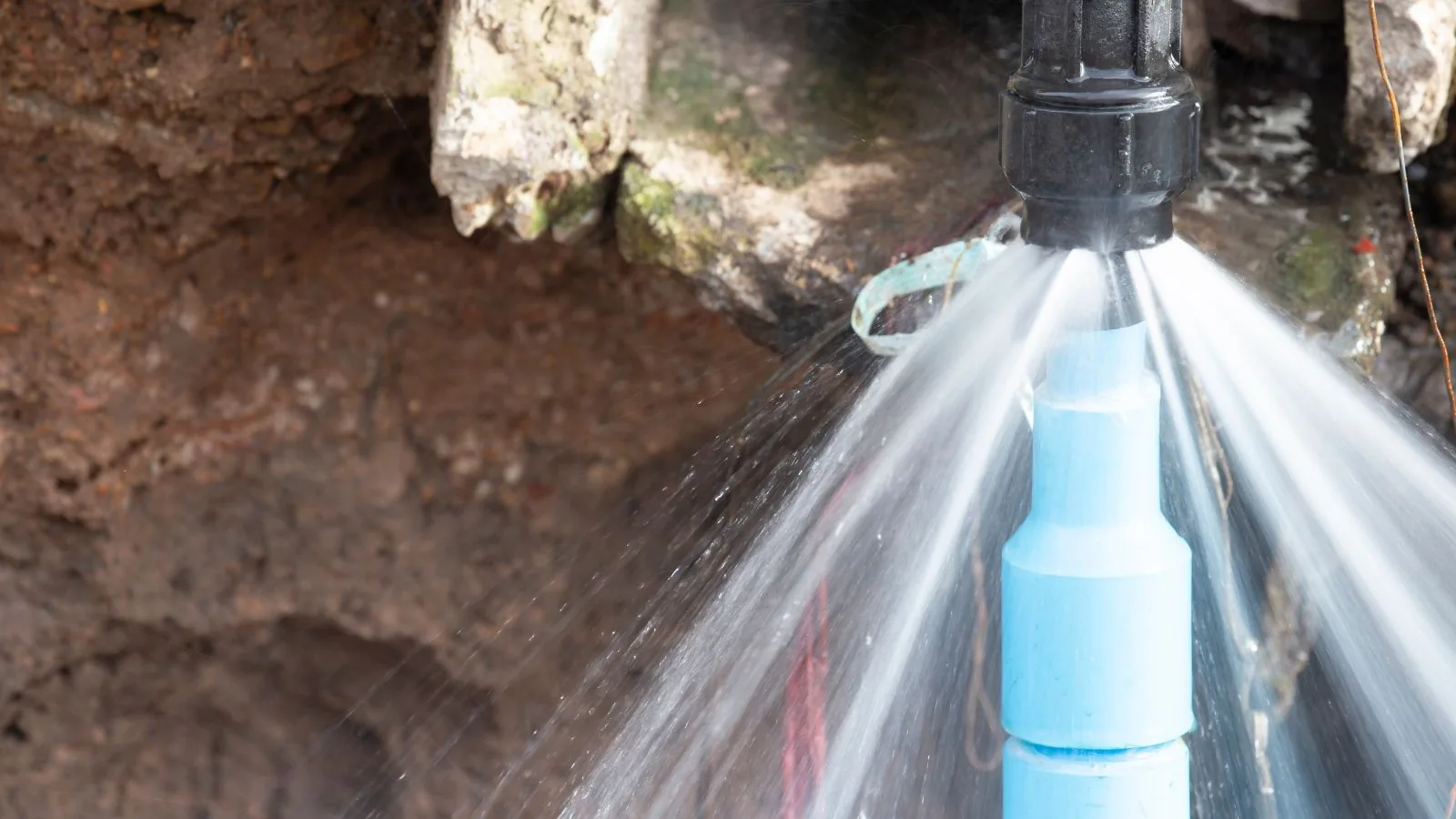
Burst pipe water damage is what remains after a pressurized supply line splits and sprays or pours water into a wall, ceiling or floor. It is an emergency from the moment it starts, because a supply line under pressure keeps flowing until someone closes a valve, and the 24/7 line is open overnight, on weekends and on holidays.
Shut off the main water valve first. Then, if you can do it safely and the area around the panel is dry, turn off power to the wet rooms, and move to dry ground while you call.
Burst pipe emergency: stop the water first
Every minute of delay moves more water into the structure. Know where the main shutoff is, because it is the single most useful thing to find before a leak happens. In many Long Island homes it sits near the water meter in the basement or utility room, and newer homes may have a second shutoff at the street curb that only the utility can reach.
If the pipe is behind a wall and you cannot see it, the symptom is a hissing sound, a damp patch spreading on drywall or a sudden drop in water pressure. Close the main, open a faucet at the bottom level of the house to drain the line and call a plumber for the repair. Restoration begins in parallel, not after.
Never put a hand into spraying water near electrical equipment. If the water is reaching the panel, outlets or ceiling light fixtures, leave the area and call 911 or the utility before calling the restoration line.
What the water does inside the building
A pressurized line behaves differently from a slow drip. Water sprays across surfaces, runs down inside wall cavities and soaks insulation and the bottom plate of the wall. It travels downward, so a pipe that bursts on the second floor can leave a wet ceiling and wet baseboards on the first.
| Where the pipe split | Where the water goes | What often needs attention |
|---|---|---|
| In an interior wall | Cavity, baseboards, flooring | Open the wall, dry the cavity, replace wet insulation |
| In a ceiling | Ceiling below, light fixtures | Relieve trapped water, cut and dry the ceiling |
| Under a floor or in a crawl space | Subfloor, joists | Pull flooring and dry the framing |
| At a washer or fixture connection | Floor, cabinet, adjacent rooms | Extract, check for hidden wet areas |
Water supply failures are Category 1 at first, meaning clean water, but they can slip to Category 2 if the water sits and picks up contamination from materials. That is another reason to start fast.
How burst pipe cleanup works
Stop and make safe
Close the main valve and confirm the power situation. A plumber repairs the line.
Extract the water
Pumps and wet vacuums remove standing water. See water extraction for the process.
Map the moisture
Moisture meters and thermal imaging show the wet area, which is usually larger than the visible stain.
Open and dry
Wet drywall and baseboard come off where needed, and air movers and dehumidifiers run until readings reach target.
Rebuild
Drywall, flooring and paint replace what was removed.
Drying is described in depth on the structural drying page, and a pipe that opened a wall is covered on the wall and drywall page. If the pipe failed in a kitchen, the kitchen water damage page covers cabinets and under-sink areas.
Winter bursts versus other seasons
Suffolk County has freezing winters, and pipes in exterior walls, attics, garages and crawl spaces can split when water inside freezes. That case has its own page, frozen pipe water damage, because the water is released later, when the ice thaws, and often when no one is home.
A burst pipe in a warm month is more likely to come from a failed fitting, a worn supply hose or a pressure problem.
The practical point is that a pipe that burst while you were away can run for hours. Ask a neighbor to check the house if you travel in winter, and set the thermostat so exterior-wall pipes stay above freezing.
What affects the cost of burst pipe cleanup
Time before shutoff
A line that ran for hours reaches more rooms than one stopped in minutes.
Rooms affected
Wet floors and ceilings on more than one level add scope.
Materials
Hardwood, carpet and plaster react differently and may or may not dry in place.
Drying days
Wall cavities and subfloors take longer than open surfaces.
Rebuild scope
Drywall, trim and flooring are priced after the structure is dry.
Sudden pipe failures are often covered by homeowners insurance, while slow leaks are often not, but your policy decides, so read it or ask your insurer. Want your real number? Call (833) 521-1033 and describe where the pipe split.
Pipe burst and water still moving?
Close the main valve, then call the 24/7 line and describe what you see.
What to do before help arrives
- Shut off the main supply valve first, then open a low faucet to relieve pressure if it is safe.
- Do not touch outlets, cords or the panel while standing in water.
- Move belongings out of the wet area and photograph the damage before cleanup.
Professional cleanup after a burst pipe follows the ANSI/IICRC S500 standard for water damage restoration.
Burst pipe FAQ
Do you handle burst pipe emergencies at night or on weekends in Medford?
Yes. The line is available 24/7, including overnight, weekends and holidays. Call and say where the pipe split and whether the water has stopped.
Do you fix the pipe?
No. A licensed plumber repairs the pipe. The work here is extraction, drying and restoring what the water damaged. Calling both at once saves time.
Will the wall have to be opened?
Often a section has to be opened, because wet insulation and framing cannot dry well behind drywall. Moisture readings decide how much.
Is burst pipe water safe to touch?
Water from a supply line starts out clean, but it can pick up contamination as it spreads. Keep skin contact limited and avoid wet electrical areas.
Do you serve Holtsville, Patchogue and the other nearby towns?
Yes. The line covers Medford and Holtsville, Yaphank, Patchogue, Middle Island and Blue Point.