
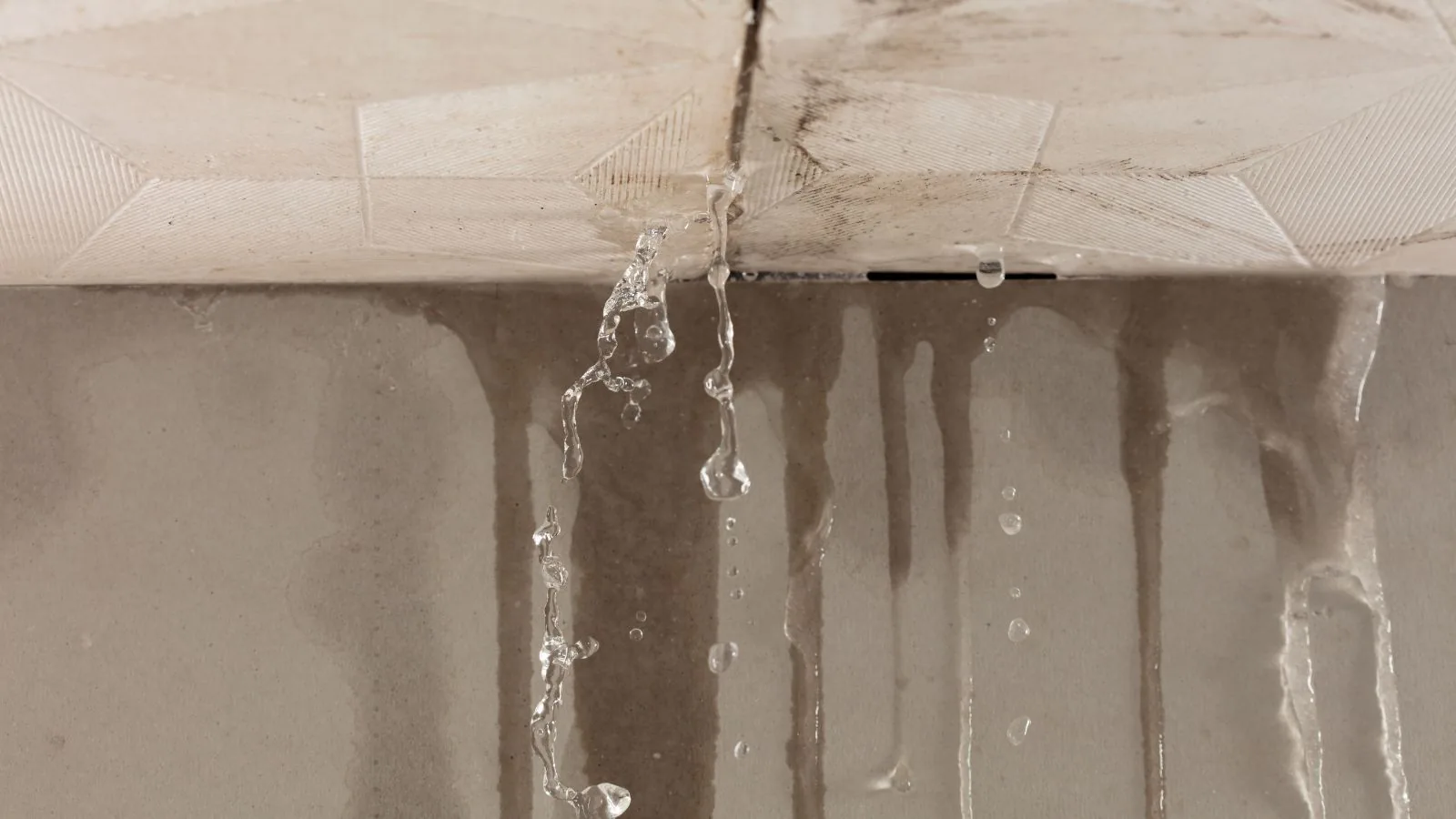
Storm water damage cleanup is the removal of rain and wind-driven water that enters a building through the roof, windows, doors, siding or an opened wall during a storm, and the drying and repair that follows.
It is an emergency when water is inside, and the 24/7 line takes calls through the night and during and after storms. Stay away from downed power lines, avoid rooms with sagging ceilings and photograph the damage. If trees or debris have opened the roof, a tarp or board-up should go on as soon as it is safe.
When storm water is an emergency
Storm water is different from a pipe leak because it arrives through openings that did not exist the day before. A branch through a window, shingles torn off in a gust and a vent that blew open are all pathways. The water often arrives with debris, and the ceiling below a leak holds it until the weight brings it down.
Call the line when:
- Water is coming through a ceiling, wall or window during or after a storm.
- A tree, branch or debris has opened the roof or wall.
- Insulation or ceiling drywall is wet.
- Water reached outlets, fixtures or the panel.
- The storm also caused flooding at ground level.
If a tree is on the house, stay outside until it is checked. Never go onto a wet roof to inspect it.
Storm water versus flood water
The two are handled differently. Storm water that came in through the roof or walls is usually clean rainwater at first, but it picks up dirt and insulation fibers, so it is treated as Category 1 or 2.
Water that rose from the ground and came in through doors or the foundation is floodwater, and it is Category 3. The flood damage cleanup page covers rising water. This page covers water that got in from above and around.
If the water entered at the roof and ran through the ceiling, the ceiling water damage page covers the repair. A plain roof leak with no storm has the same cleanup and is handled there.
Weather in Medford
Suffolk County sees nor'easters, summer thunderstorms and the occasional tropical system, and storms along the south shore of Long Island can bring heavy rain and high winds.
For the dates and impacts of past storms, the National Weather Service and the county emergency management office publish records, and a general statement about any single event would not be reliable here. The practical use is to review your roof, gutters and window seals before storm season and to know your insurance deductible for wind and water events.
Some homeowners policies have a separate, higher deductible for named storms or wind damage, so read the terms. Keeping gutters clear and downspouts directed away from the foundation reduces the water that ends up at the walls.
What cleanup involves
Stop further entry
Temporary tarps or board-ups cover openings. A roofer or contractor makes permanent repairs.
Remove wet materials
Saturated insulation, ceiling drywall and soaked carpet are removed.
Rebuild
Drywall, insulation, flooring and paint are replaced.
Wind damage often leaves the building open, and tarping is part of limiting the loss, although structural and roof repairs belong to roofers and builders. If the storm also flooded the basement, the basement water damage page covers that side.
What to document
| What to record | Why |
|---|---|
| Photos of the opening, the debris and the wet areas | Show the cause and extent of the loss |
| Dated video walk-through | Captures the condition before work begins |
| Damaged items before disposal | Supports a contents claim |
| Receipts for emergency repairs such as tarps | Documents the steps taken to limit damage |
| Weather date and time | Ties the loss to a specific event |
What affects the cost
Opening size
A small roof breach wets less than a missing section.
Time before cover
Rain that continues to enter adds to the loss.
Materials
Insulation, drywall and flooring react differently.
Drying days
Large areas with thick insulation dry slowly.
Rebuild scope
Roof and exterior repairs are separate from interior drying.
Wind and rain damage may be covered, but deductibles and limits differ, so check your policy and ask your insurer. Want your real number? Call (833) 521-1033.
Storm water inside?
Call the 24/7 line and tell it where the water got in.
Storm cleanup follows the ANSI/IICRC S500 standard for water damage restoration.
Storm water damage FAQ
Do you handle storm damage emergencies at night or on weekends in Medford?
Yes. The line is available 24/7, including overnight, weekends and holidays, and during storms.
Do you repair roofs?
No. A roofer or contractor does that. The work covered here is water removal, drying and interior restoration, and temporary covering to limit the loss.
Is rainwater that came through the roof clean?
It starts fairly clean but picks up dirt and insulation, so it is treated carefully and wet insulation is usually removed.
What if the power is out?
Equipment can run on generators in some cases. Say so when you call, and stay out of areas where wiring may be wet.
Do you serve the nearby towns?
Yes. Calls come from Holtsville, Yaphank, Patchogue, Middle Island and Blue Point.