
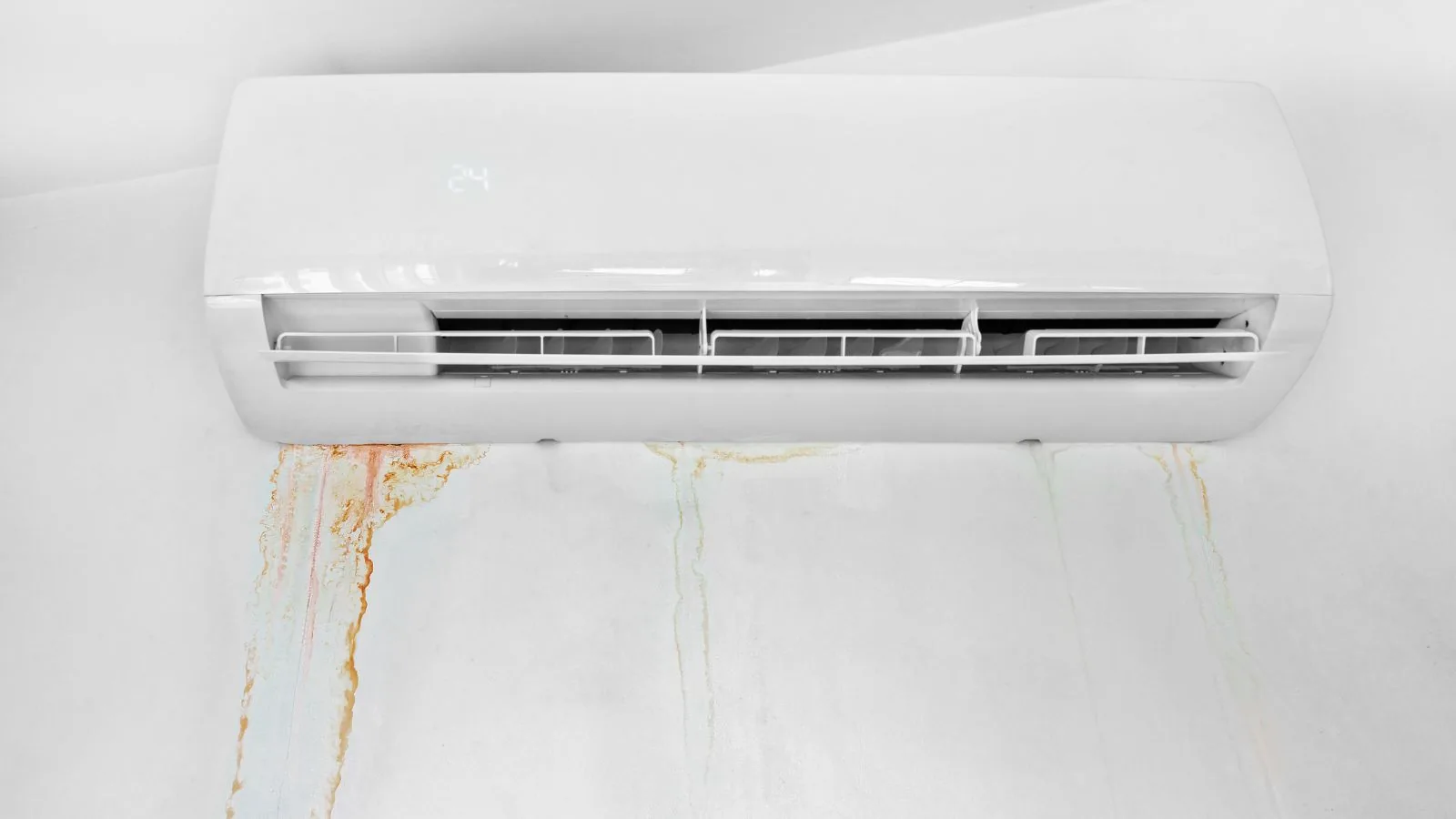
AC leak water damage is the damage caused when condensation from an air conditioner or air handler escapes its drain and soaks insulation, ceilings, closets or floors. In summer a cooling system can produce several gallons of condensate a day, so a clogged line can overflow quickly.
Turn the system off at the thermostat, switch off the air handler at its own switch if you can reach it, and keep the floor and any equipment dry. The 24/7 line takes calls any time, though most of these losses are fixed with ordinary drying.
How an AC causes water damage
Cooling coils pull moisture from the air, and that water runs into a drain pan and out through a condensate line. When the line clogs with algae and debris, the pan overflows, and the water goes where gravity takes it.
Air handlers in attics, closets and above ceilings send it into insulation and drywall. A second cause is a cracked pan or a frozen coil that melts and floods the pan.
Ductless wall units can also drip down the wall when the drain line is blocked or kinked, which leaves rust-colored streaks on the wall below. Window units can drip into the wall cavity when they are installed with the wrong slope.
Signs of an AC leak
- A ceiling stain that grows when the AC runs and stops when it is off.
- Water in the drain pan or on the floor of a closet or utility room.
- A musty smell near a vent or air handler.
- A rust stain below a ductless unit.
- Peeling paint or a soft section of wall near a unit.
Because the water comes slowly, damage often builds for days or weeks before it shows. Insulation near the unit holds the water and keeps the ceiling damp, which is why drying the cavity matters more than wiping the stain.
What the cleanup involves
Shut it down
Turn the system off so no more condensate is produced. An HVAC technician clears or repairs the line and pan.
Find the wet area
Meters and thermal imaging trace water through insulation, ceilings and walls.
Open and dry
Wet insulation and soft drywall are removed, and the cavity is dried with air movers and dehumidifiers.
Check for growth
Moisture that lasted for weeks may have supported mold, and the mold remediation page covers that case.
Repair
Drywall, texture and paint are replaced.
This work is water damage restoration, not HVAC service. A heating and cooling company fixes the unit, the pan and the drain line, and the restoration crew handles what the water soaked. Where the water has come through a ceiling, the ceiling water damage page describes the repair in detail, and the structural drying page explains how drying is verified.
AC leak versus other ceiling leaks
| Clue | Points to | Next step |
|---|---|---|
| Stain grows only when the AC runs | Condensate overflow | Turn the system off and call an HVAC technician |
| Stain appears after rain | Roof leak | See the ceiling page and call a roofer |
| Steady drip regardless of weather or AC | Supply line | Close the main and see the burst pipe page |
| Rust streaks below a ductless head | Blocked or kinked drain | Clear the line and dry the wall |
Tracing the source before repairing the ceiling matters because a repaired ceiling will stain again if the source continues.
What affects the cost
Duration
Weeks of slow dripping can saturate insulation and framing.
Location of the unit
Attic and ceiling-mounted units wet more material than closet units.
Materials
Blown insulation, drywall and trim need different handling.
Drying days
Enclosed cavities dry more slowly.
Rebuild scope
Ceiling and wall finishes are priced after drying.
Some policies treat gradual leaks as maintenance issues, while a sudden overflow may be treated differently, so check your policy and ask your insurer. Want your real number? Call (833) 521-1033 and describe the unit.
AC leak wet the ceiling?
Turn the system off and call the 24/7 line to describe where the water shows.
What to do before help arrives
- Turn the system off at the thermostat so it stops making condensate.
- Place a bucket under drips and keep people away from any bulging ceiling.
- Do not touch wet wiring or the unit's electrical panel, and photograph the drain pan and the stain.
The drying and monitoring that follow a condensate leak are based on the ANSI/IICRC S500 standard for water damage restoration.
AC leak FAQ
Do you repair air conditioners?
No. A licensed HVAC technician handles the unit, pan and drain line. The work covered here is drying and restoring what the water damaged.
Can I keep using the AC while the ceiling is wet?
It is better to turn it off until the leak is found, because running it adds more water. A technician can tell you when it is safe.
Why does my ceiling stain only in summer?
Cooling season produces the condensate. In winter the system makes little water, so the stain may look quiet until the next hot spell.
Is there a risk of mold?
Moisture that stays in insulation and drywall for a few days can support mold. Drying the cavity quickly lowers that risk, and the mold page describes next steps.
Do you serve homes in the towns near Medford?
Yes. Calls come from Holtsville, Yaphank, Patchogue, Middle Island and Blue Point.