
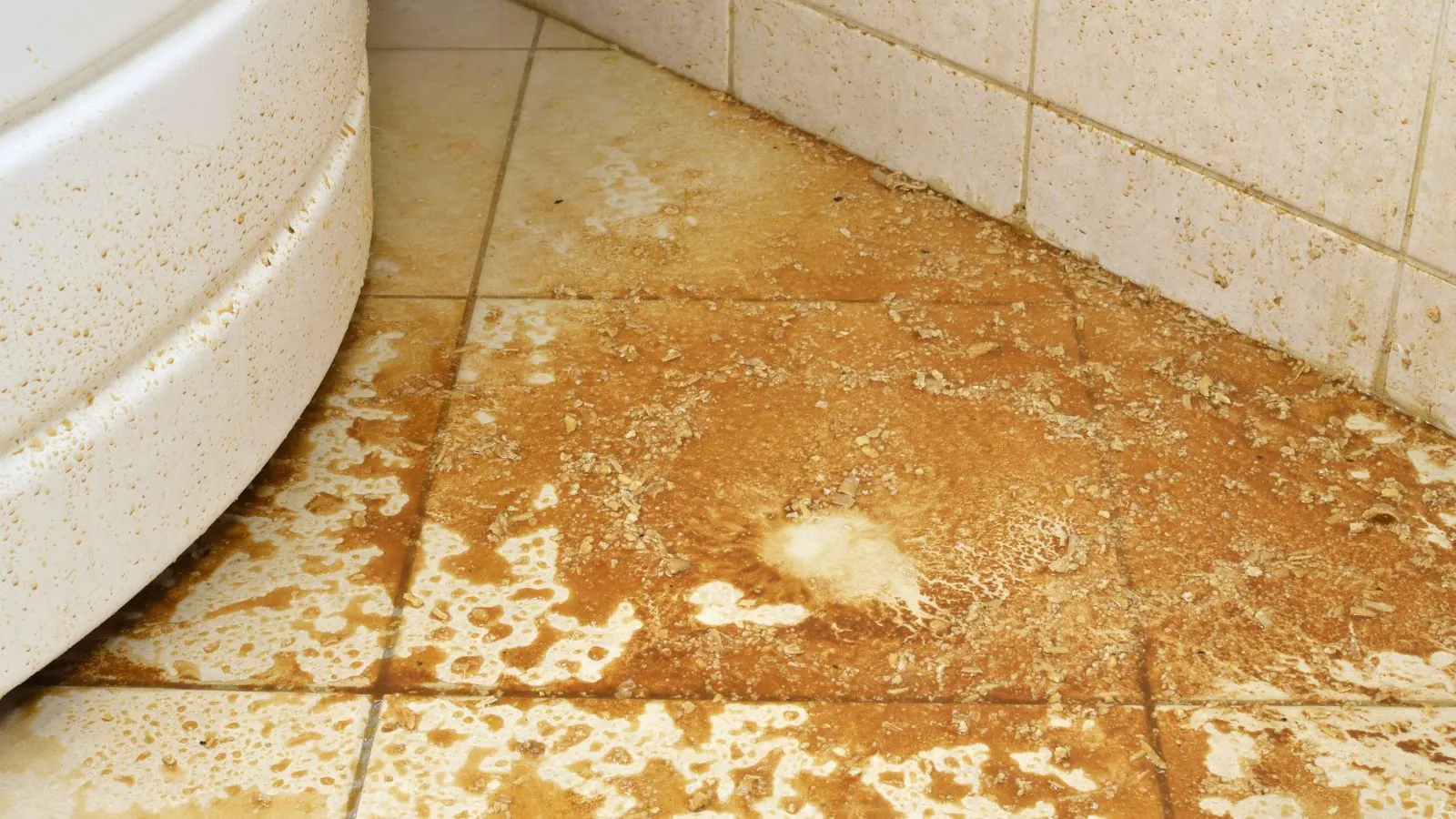
Appliance leak water damage is the damage that follows a failed supply hose, drain line or seal on a washing machine, dishwasher, refrigerator ice maker or similar appliance. It is an emergency when water is on the floor or moving toward finished rooms, and the 24/7 line is open overnight and on weekends.
Unplug the appliance if the cord and floor are dry, close the shutoff valve behind it, and mop the water at the edge before it reaches walls or other rooms.
What fails and how
Appliance losses come from a short list of parts. Washing machine supply hoses can burst under pressure or work loose at the faucet. Dishwasher door seals, pump hoses and supply fittings wear out. Refrigerator ice maker lines are thin plastic or braided tubing that can kink or split. Laundry drain standpipes overflow when they back up.
Water from these sources starts clean, but the leaks are often hidden. A refrigerator line can drip behind the unit for weeks, and a dishwasher can leak into the cabinet base and subfloor with no sign on the surface. That is why a floor can be soft or discolored well before any puddle appears.
When it is an emergency
Call right away when:
- Water is spreading across the floor or under cabinets.
- A hose is spraying or the machine is still running.
- Water has reached a ceiling below, such as a laundry room over a finished room.
- Floors feel soft, bubbled or warm and damp.
- You have found a leak behind an appliance and do not know how long it ran.
Pulling an appliance out to inspect it is reasonable once the supply is off and the floor is dry. If water touches the outlet or cord, leave it alone and cut power at the panel only if you can reach it dry.
Where the water goes
| Appliance | Typical leak path | What is often affected |
|---|---|---|
| Washing machine | Hose burst or overflow | Floor, adjacent rooms, ceiling below |
| Dishwasher | Door seal or line leak | Cabinet base, subfloor, flooring |
| Refrigerator ice maker | Supply line split | Flooring behind and under the unit |
| Laundry sink or standpipe | Overflow or drain backup | Floor, wall base, floor below |
| Portable dehumidifier or humidifier | Full tank, hose failure | Carpet, wall base |
The kitchen water damage page covers cabinets and the sink area, and this page focuses on the appliance failure and its path through the floor. If the water came from a supply line inside a wall, the burst pipe page applies.
How cleanup works
Make safe
Close the shutoff, unplug the unit and keep power away from wet floors.
Extract and open
Wet vacuums remove water, and the appliance is pulled so the floor and wall base can be checked.
Find hidden moisture
Meters and thermal imaging check subfloor, cabinet bases and the ceiling below.
Replace damaged materials
Swollen laminate, wet underlayment and soft cabinet bases are removed and rebuilt.
Because these leaks are often slow, the drying can involve more material than the puddle suggests. If the leak ran for days, mold may have started, and the mold remediation page explains what that involves.
Local note for Medford homes
Laundry rooms and kitchens in Medford homes are often on the first floor above a basement, so a washer or dishwasher leak can come through the ceiling into the basement below, where the damage is first noticed.
Check ceiling tiles and joist bays under the appliance if the floor feels wet. The practical step is to replace rubber washer hoses with braided ones as a routine check and to know where each appliance shutoff is.
What affects the cost
How long it leaked
A slow leak behind a unit soaks further than a one-time overflow.
Floor and cabinet materials
Laminate, hardwood, vinyl and cabinet bases each dry differently.
Rooms affected
Water reaching a ceiling or another room adds scope.
Drying days
Closed cabinet bases and subfloors take longer to dry.
Rebuild scope
Floors and cabinets are priced after drying.
Coverage depends on the cause and duration, and a sudden hose failure is treated differently from a leak that went on for weeks, so ask your insurer and keep the failed part if you can. Want your real number? Call (833) 521-1033.
Appliance water on the floor?
Close the shutoff and call the 24/7 line. Tell it what failed.
What to do before help arrives
- Unplug the appliance or switch off its breaker only if the outlet and floor are dry, and close its water supply valve.
- Do not run the appliance again until the cause is found.
- Move rugs and items off wet flooring and photograph the appliance, the hose and the damage.
Drying after an appliance leak follows the ANSI/IICRC S500 standard for water damage restoration.
Appliance leak FAQ
Do you handle appliance leak emergencies at night or on weekends in Medford?
Yes. The line is available 24/7, including overnight, weekends and holidays. Call and say which appliance leaked and where the water went.
Is the water from a dishwasher or washer dangerous?
Supply water is clean at first. Drain water from a washer or dishwasher is Category 2 because it carries soap and soil, so wet porous materials need more care.
Do you repair appliances?
No. A repair technician or installer handles the appliance. The work covered here is water cleanup, drying and restoring the damaged floor and cabinets.
Can I keep the failed hose for insurance?
Yes. Keeping the part and taking photos of the leak and the damage gives your insurer a clear record.
Do you cover homes outside Medford?
Yes. The line covers Holtsville, Yaphank, Patchogue, Middle Island and Blue Point as well.