
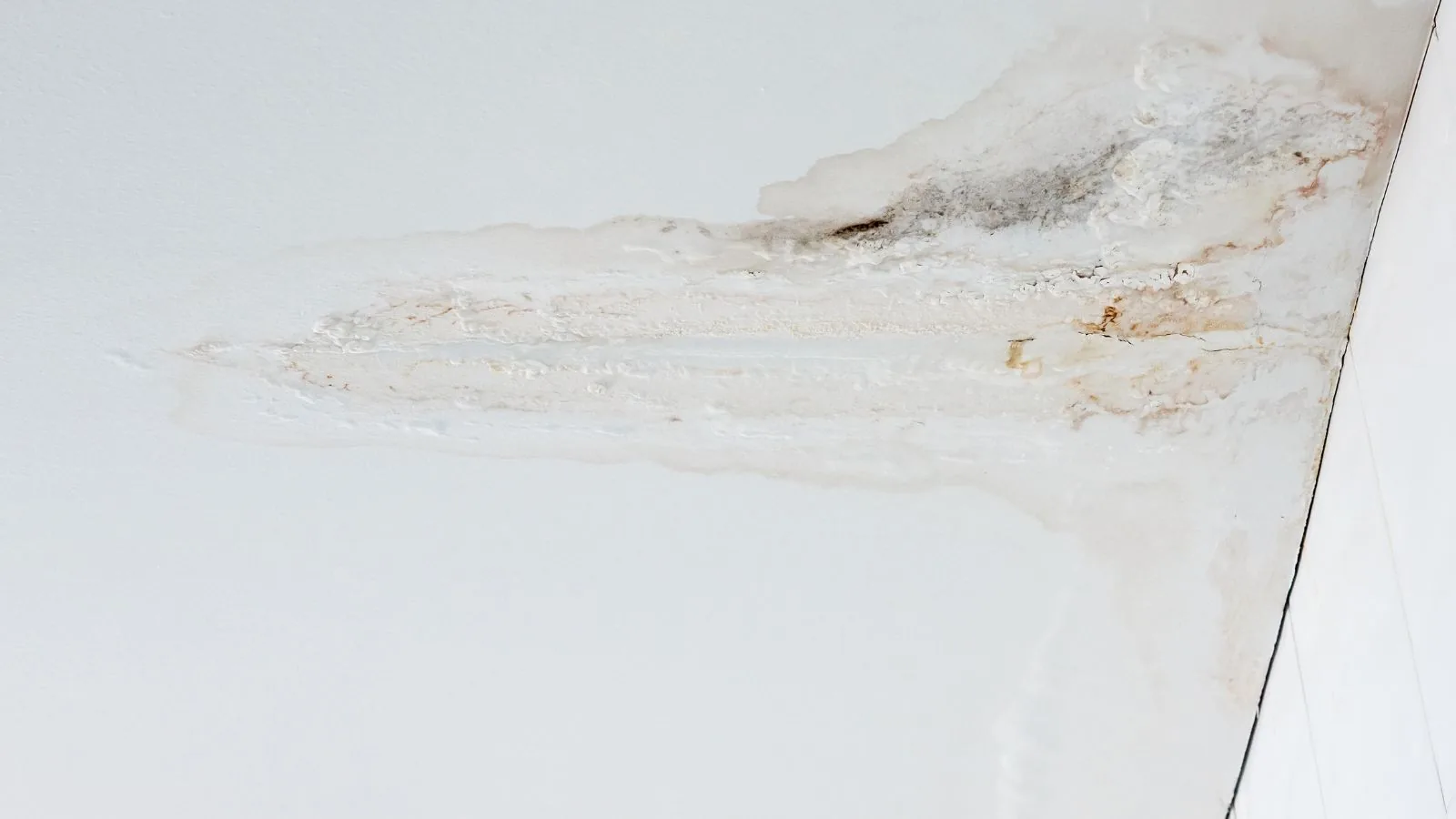
Ceiling water damage repair covers stained, sagging and collapsed ceilings and the wet insulation and framing above them, whether the water came from a roof leak, an upstairs bathroom or a supply line. A dripping or bulging ceiling is an emergency, because the weight of trapped water can bring it down, and the 24/7 line answers overnight and on weekends.
If the ceiling is bulging, keep people out of the room, put a bucket under the low point of the sag and do not poke it with your hands. If a light fixture is wet, leave the circuit off and stay clear.
When a wet ceiling is an emergency
A faded brown ring that has not changed in a year is probably an old leak that has dried out. A ceiling that is stained, sagging, dripping or has changed since yesterday is an active problem. Water pools in the insulation and the drywall holds it until the weight is too much.
Call the line right away when:
- The ceiling is bulging or you can see it deflecting.
- Water is dripping through a light fixture, fan or vent.
- The stain is growing or darkening.
- There is a wet attic or a bathroom directly above.
- It started during or after rain, snow or ice.
For any water near a light fixture or wiring, turn off power at the panel only if you can reach it without standing in water, and call an electrician or the utility for any sparking or burning smell.
Finding where the water came from
The stain is rarely under the leak. Water travels along joists and pipes before it shows, so a spot over the kitchen may start at a roof penetration across the room. Moisture meters and thermal imaging trace the wet area back to where it began, and the source decides the fix.
| Likely source | Clues | What it affects |
|---|---|---|
| Roof leak | Stain after rain or snowmelt, wet attic insulation | Decking, insulation, ceiling below |
| Upstairs bathroom or toilet | Stain below a bath, appearing after use | Subfloor, joists, ceiling |
| Supply line in a ceiling cavity | Steady drip, not tied to weather | Cavity, insulation, drywall |
| HVAC condensate or attic equipment | Stain near a vent or air handler | Insulation, drywall |
| Ice dam or wind-driven rain | Stain at the eaves, in winter or storms | Edge of roof, outer ceiling |
Plumbing sources are handled on the burst pipe page, and the AC leak page covers condensate water from air handlers.
Roof leaks that reach the ceiling
Roof leaks have no page of their own here because the damage that matters inside is the same: wet insulation, a wet ceiling and risk of mold in the attic.
Water enters at shingles, flashing, a chimney or a vent boot and runs down rafters before it appears. In Medford, where winter freeze and thaw and summer thunderstorms both stress roofs, the first sign is often a stain a few days after the weather.
This work is cleanup, not roofing. Crews remove wet insulation, dry the attic and ceiling cavity and repair the damaged drywall. Stopping the leak at the roof belongs to a roofer, so call one in parallel and ask for a temporary cover if the roof cannot be repaired right away. For wind and rain damage more broadly, see the storm water damage page.
How a ceiling is repaired
Protect and relieve
Cover the room below and let trapped water out, usually through a small opening cut where the ceiling sags.
Remove wet material
Take out insulation and any drywall that is saturated or soft.
Dry the cavity
Run air movers and dehumidifiers until readings reach target.
Rebuild
Replace the drywall, tape, texture and paint to match.
Dry first, repair second. A ceiling patched over wet insulation will stain again and can grow mold above the paint. The structural drying page explains how readings are tracked.
What affects the cost of ceiling repair
Source and duration
A one-time leak is simpler than one that ran for weeks.
Area
The size of the wet ceiling and any wet attic determine the scope.
Materials
Plaster, textured drywall and insulation types each need different handling.
Access
Attic access, high ceilings and a finished room below add time.
Finish match
Texture and paint matching is priced as part of the rebuild.
Coverage depends on what caused the leak. Sudden roof damage from a storm is treated differently from a worn roof, so ask your insurer. Want your real number? Call (833) 521-1033 and describe the stain.
Ceiling bulging or dripping?
Call the 24/7 line. Keep people out from under it and tell the line what is above the room.
What to do before help arrives
- Keep people out from under a bulging or sagging ceiling and do not poke it without a bucket and protection below.
- Turn off lights and fixtures on the wet ceiling at the switch, and avoid using them until it is checked.
- Move furniture away and photograph the stain and any drips.
Drying wet framing and insulation above a ceiling follows the ANSI/IICRC S500 approach of measuring moisture, then drying to a documented standard.
Ceiling water damage FAQ
Do you handle ceiling water emergencies at night or on weekends in Medford?
Yes. The line is available 24/7, including overnight, weekends and holidays. Call and describe the stain, any bulge and what is above the room.
Should I puncture a bulging ceiling?
Only a trained crew should relieve one, because the water can bring plaster or drywall down. Keep people out, place a container under the low point of the sag and call the line.
Do you fix the roof?
No. The work is water cleanup, drying and ceiling repair. A roofer repairs the leak itself, and it helps to have both lined up.
Can a stained ceiling just be painted over?
Painting hides the stain but not the moisture. If the insulation above is wet, the stain returns and mold can develop, so the cavity has to dry first.
Do you serve homes outside Medford?
Yes. Calls come from Holtsville, Yaphank, Patchogue, Middle Island and Blue Point as well.