
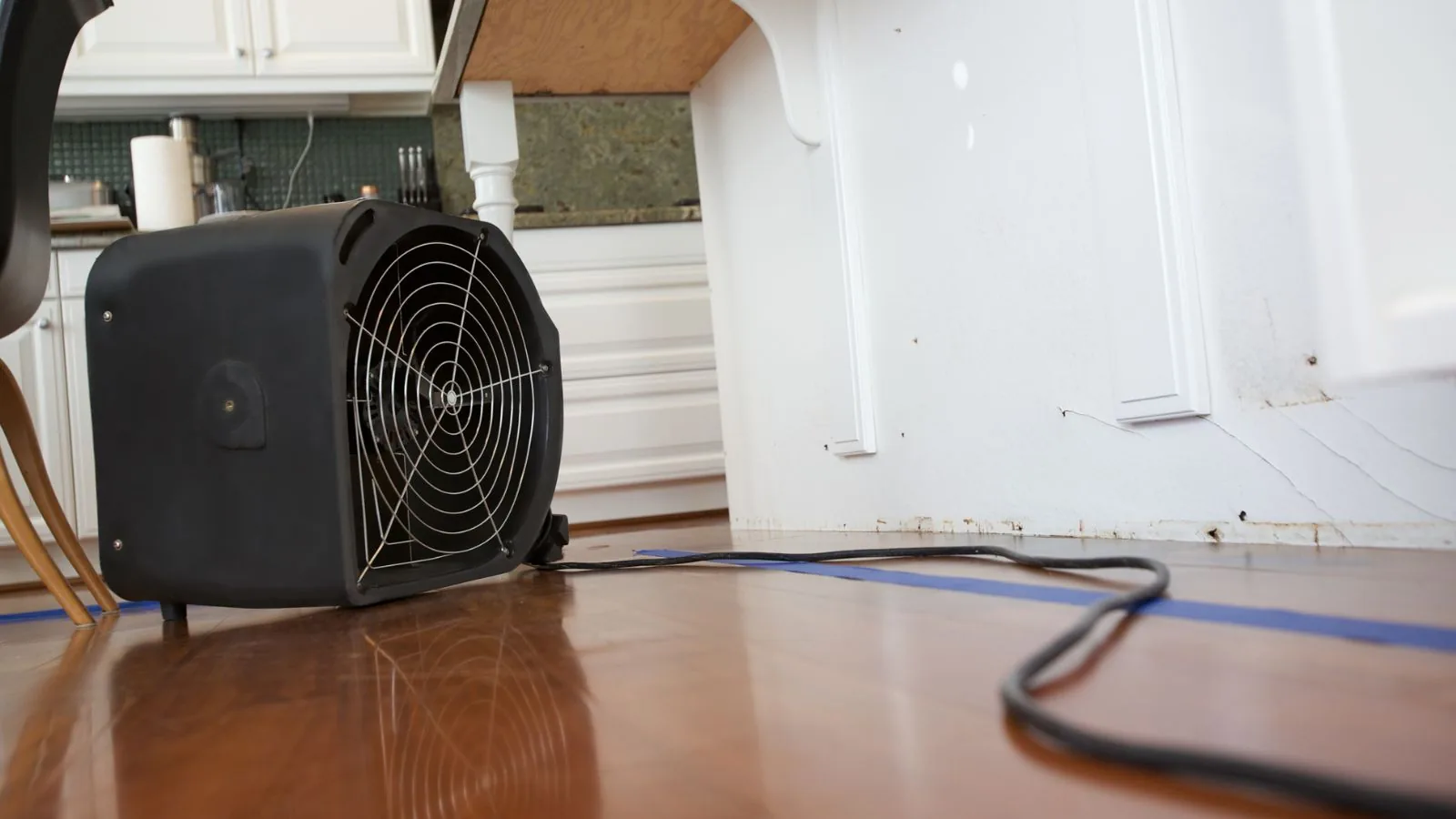
Kitchen water damage restoration is the drying and repair of cabinets, countertops, flooring and walls after a leak at the sink, the supply lines or the drain. A kitchen leak often starts inside a cabinet where no one is looking, and it can wet the base, the subfloor and the room below before it shows.
Close the valves under the sink, or the main if you cannot reach them, empty the wet cabinet and take photos. The 24/7 line is open any hour if water is spreading.
Where kitchen leaks start
Most kitchen water loss comes from a few places. The supply lines under the sink and the faucet connections loosen or crack. The drain trap and disposal leak at joints. The dishwasher connection leaks behind the cabinet. A sink that overflows with a stopped drain fills the basin and runs over the edge, and a leak at the refrigerator line soaks the floor behind it.
The damage depends on how long the water runs and what it reaches. Particleboard cabinet bases swell and fall apart after a short soaking, while solid wood can often be dried. Laminate countertops delaminate along the edges, and flooring under the cabinets stays wet long after the surface looks dry.
Signs to look for
- Swollen or soft cabinet base or toe kick.
- A musty smell under the sink.
- Buckling floor near the sink or dishwasher.
- Stains or bubbles in drywall on the back of the cabinet wall.
- A ceiling stain in the room below the kitchen.
Check for these even after a small leak. The sink base is the easiest place to find a slow drip, and the toe kick is where water hides.
What cleanup looks like
Stop the water
Close the shutoff valves or the main and unplug any wet appliances.
Empty and expose
Remove cabinet contents. Toe kicks and drawers may come off to open the base.
Map moisture
Meters and thermal imaging follow the water under floors and behind cabinets.
Dry in place where possible
Air movers and dehumidifiers dry cabinets, floors and walls. See structural drying.
Replace what cannot dry
Swollen particleboard, wet insulation and soft drywall are removed and rebuilt.
If the failure was an appliance, the appliance leak page covers dishwashers and refrigerator lines in depth. If a pipe in the wall opened, see the burst pipe page. The hardwood floor page explains what happens when the kitchen floor is wood.
Cabinet materials and what can be saved
| Material | Reaction to water | Typical outcome |
|---|---|---|
| Solid wood or plywood boxes | Absorb water but dry well | Often dried and kept |
| Particleboard or MDF boxes | Swell and lose strength | Usually replaced |
| Laminate countertop | Edges lift, substrate swells | Edge damage often means replacement |
| Stone countertop | Not affected by water | Cleaned, base may need drying |
| Vinyl or tile flooring | Water gets under seams | Lift to check subfloor |
Cabinet replacement is expensive, which is why drying quickly matters. If wood boxes can be dried, the cost of the rebuild drops.
A note on Medford kitchens
Medford homes of different eras have different finishes, from 1960s subdivisions to newer builds, and the age of the kitchen tells you what to expect. Older kitchens may have solid wood cabinets and vinyl flooring over wood subfloors. Newer kitchens often use laminate and engineered floors. Knowing which you have helps you describe the loss when you call.
What affects the cost
Time before discovery
A slow leak that ran for weeks soaks cabinets and the subfloor.
Cabinet material
Particleboard bases are replaced more often than solid wood.
Flooring
Vinyl, tile, hardwood and laminate each react differently.
Area
A wet kitchen adjacent to a dining room or hall extends the job.
Rebuild
Cabinets, counters and flooring are priced separately from drying.
Coverage depends on the cause, since a sudden supply line failure is treated differently from a long-term drip, so check your policy and ask your insurer. Want your real number? Call (833) 521-1033.
Kitchen water still spreading?
Close the shutoff valves and call the 24/7 line.
What to do before help arrives
- Shut off the supply valve under the sink or the dishwasher, and the main if the source is unclear.
- Keep power off to wet outlets and appliances, and do not use them until they are dry and checked.
- Empty the cabinets under the sink and photograph the damage before anything is thrown away.
Drying cabinets, subfloor and walls in a kitchen follows the ANSI/IICRC S500 standard for water damage restoration.
Kitchen water damage FAQ
Do you handle kitchen leaks at night or on weekends in Medford?
Yes. The line is available 24/7, including overnight, weekends and holidays. Call if water is spreading and describe where it started.
Do the cabinets have to be replaced?
Not always. Solid wood or plywood can often dry in place, and particleboard that swelled usually cannot. Moisture readings and condition decide.
Can mold form behind kitchen cabinets?
It can if materials stay damp for days. That is why drying begins quickly. The mold remediation page covers it if you already see growth.
Do you repair the plumbing?
No. A plumber handles the pipe or drain. The work covered here is drying and restoring the damage.
Do you serve the towns around Medford?
Yes. Calls come from Holtsville, Yaphank, Patchogue, Middle Island and Blue Point.