
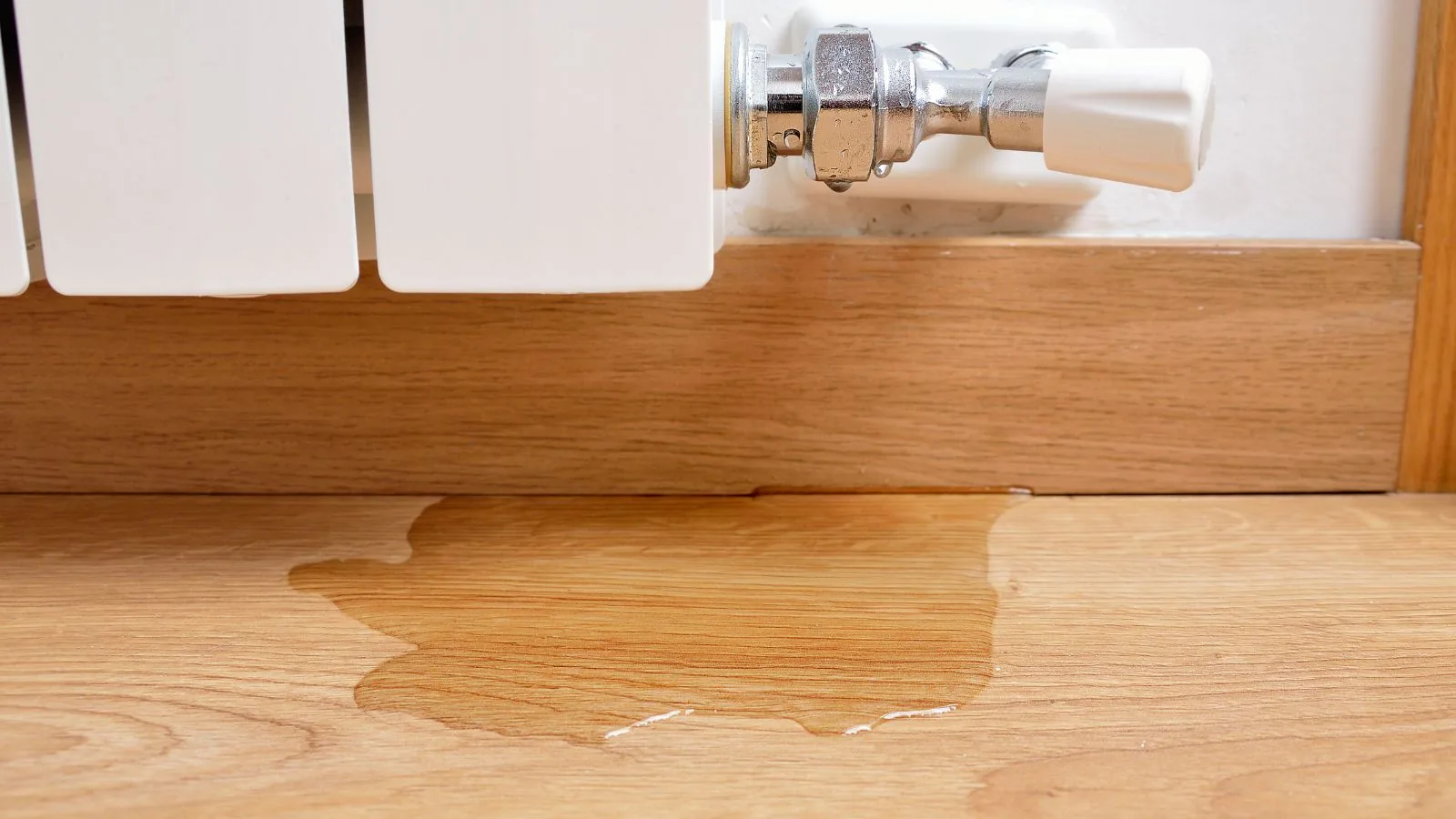
Slab leak water damage is the damage that follows a supply line leaking beneath a concrete slab, where the water rises through cracks and joints and soaks flooring, baseboards and walls above.
It is an emergency when water is visible on the floor or the leak is large, and the 24/7 line is available overnight and on weekends. Close the main water valve, keep electronics and rugs off wet areas and note the meter reading so a plumber can confirm a leak.
Urgent signs of a leak under the floor
Most people searching for this do not yet know the name of the problem. They have a damp spot on tile, a warm patch on a floor, the sound of running water when nothing is on, a water bill that jumped or a musty smell near a wall. A slab leak is a leak in a pressurized line beneath the slab, and the water has nowhere to go but up.
A simple check helps. Turn off every fixture and appliance, then watch the water meter. If the dial keeps moving, water is leaving the system somewhere, and a leak detection plumber can find where. This page covers the restoration of what the water damaged, and the plumber handles the leak itself.
How common slab leaks are in Medford
The honest answer is that it depends on the house. A Medford home with a basement usually has its supply lines running in the open overhead, and a leak there is a basement or ceiling problem and not a slab problem. Slab-on-grade construction appears in additions, garages, some newer builds and many commercial units. Check your property record or ask your building department which foundation type you have.
If your home is on a slab, the mechanism is the same everywhere. Copper and other metal lines can corrode or rub through under the concrete, and joints can fail where the line was bent. Without a local statistic, the practical point is this: if you have the symptoms above, treat them seriously whatever the foundation type.
What the water does above the slab
Water that rises through a slab spreads under flooring first. Floating floors and hardwood absorb it from below, and tile can hide water beneath it, which makes the damage look smaller than it is. Baseboards and the bottom of drywall wick moisture up, and carpet on a slab can hold water for days.
| Floor above the slab | What water does | What is usually needed |
|---|---|---|
| Ceramic or porcelain tile | Water travels under tile and grout | Check with a meter, lift tile if the substrate is wet |
| Laminate or vinyl plank | Planks swell or buckle | Lift planks, dry the slab and replace |
| Hardwood over slab | Cupping, staining | Test for moisture, remove and dry, or replace |
| Carpet and pad | Pad soaks, odor develops | Remove pad, dry the slab, reinstall or replace |
| Drywall base | Wicks moisture up | Cut a flood line, dry the cavity |
The hardwood floor and carpet pages explain how each surface is handled after a leak from below.
How restoration is done
Confirm and stop the source
A leak detection or plumbing professional finds and repairs the line. The main valve stays closed until then.
Map the moisture
Meters, thermal imaging and slab moisture tests show how far water spread.
Dry the slab and structure
Air movers and dehumidifiers run until the slab and walls read dry. The structural drying page has details.
Rebuild
Flooring, base and paint are replaced as needed.
Concrete dries slowly, and a slab that looks dry may still be releasing moisture upward. Rebuilding a floor over it too soon is how a leak comes back as a cupped board or a peeling edge.
What affects the cost of slab leak damage
Duration of the leak
Slow leaks that ran for weeks do more hidden damage.
Floor type
Tile, hardwood and carpet each have different removal and drying needs.
Area
The number of rooms the water reached.
Drying days
Concrete holds moisture and dries more slowly than wood or drywall.
Rebuild
Replacing flooring and finishes is priced separately.
Insurance often treats a sudden failure and a long-term leak differently, and some policies exclude damage from a leak that went unnoticed, so read your policy or ask your insurer. Want your real number? Call (833) 521-1033 and describe the floor.
Water coming up through the floor?
Close the main valve and call the 24/7 line to describe where it shows.
What to do before help arrives
- Shut off the main water supply if you suspect a leak under the floor, then check the meter to see if it still moves.
- Do not run appliances that use water until a plumber has checked the line.
- Note warm spots, damp flooring or the sound of running water, and photograph any damage.
Restoration after a slab leak is measured and documented in line with the ANSI/IICRC S500 standard for water damage restoration.
Slab leak FAQ
Do you handle slab leak emergencies at night or on weekends in Medford?
Yes. The line is available 24/7, including overnight, weekends and holidays. Call and describe what you see on the floor and at the meter.
How do I know if my floor is wet because of a leak under the slab?
Signs include a damp or warm spot, a moving water meter with everything off, the sound of running water and a musty odor. A plumber can confirm it with leak detection.
Do you repair the line under the slab?
No. A plumber repairs or reroutes the line. The work covered here is drying and restoring what the water damaged.
Can flooring be saved after a slab leak?
Sometimes. Tile and some hard floors dry in place, while carpet pad and swollen laminate usually come out. Moisture readings decide.
Do you serve the towns near Medford?
Yes. Calls come from Holtsville, Yaphank, Patchogue, Middle Island and Blue Point.