
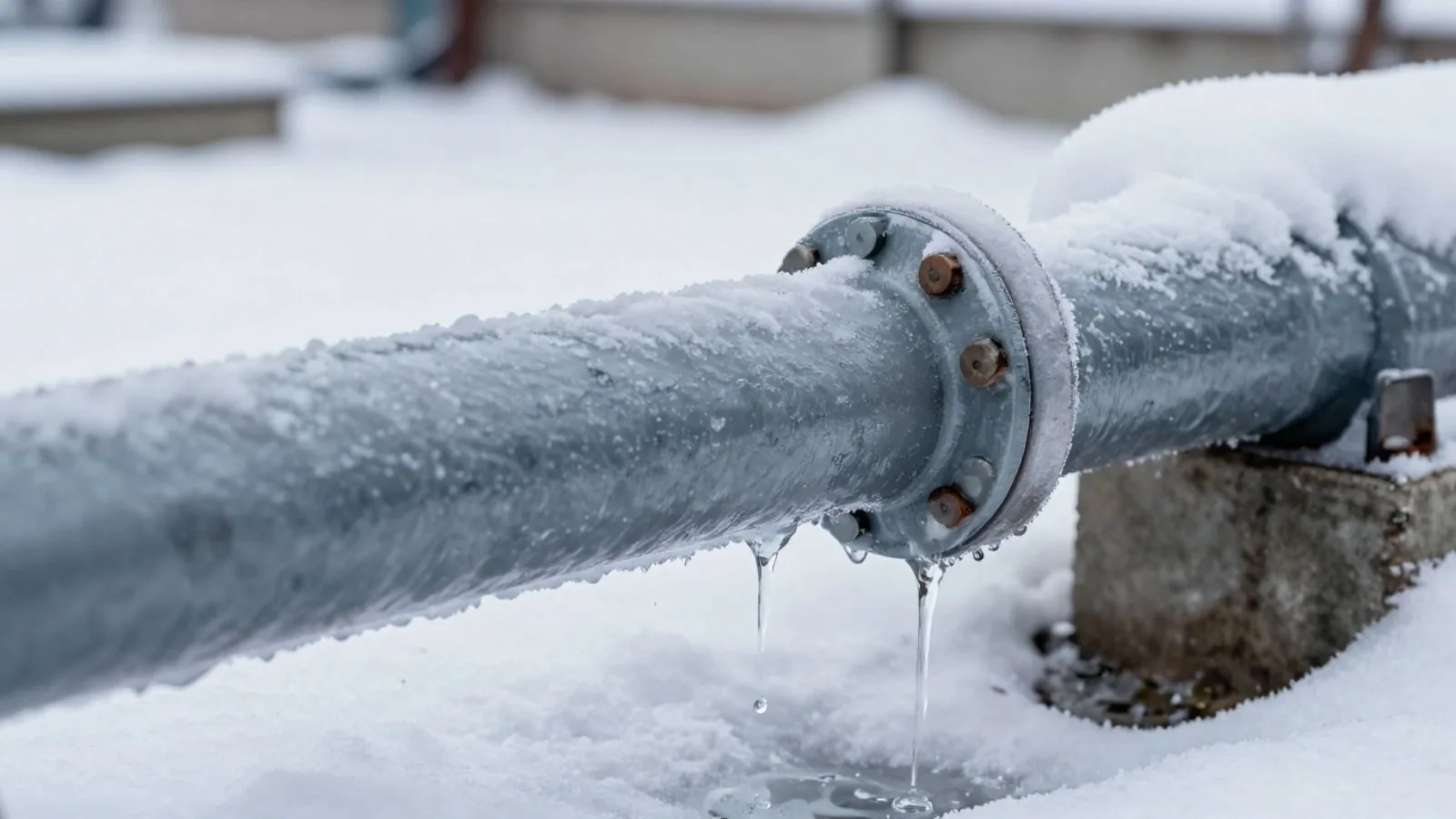
Frozen pipe water damage is the water released when ice inside a supply line splits the pipe and then melts, often hours after the freeze. It is an emergency because the leak starts at the moment of the thaw, which may be when the house warms up in the morning or when you come home from a trip, and the 24/7 line takes calls at any hour.
Close the main water valve at once. If any ceiling is sagging or the panel area is wet, keep out of that area and call 911 or the utility if there is an electrical risk.
When a frozen pipe turns into an emergency
Water expands as it freezes, and ice does not have to burst a pipe where the ice sits. The pressure builds between the ice blockage and a closed faucet, and the pipe splits along its weakest point, often a section that looks fine. The pipe may hold until the ice melts, and then the split leaks as water starts to flow again.
That delay is why a frozen pipe leak often catches people off guard. A pipe that gave you no water at 7 a.m. can be flooding a wall by noon. If you turn on a tap in winter and nothing comes out, close the main and call a plumber before the line thaws on its own.
Where freezing happens in Medford homes
Suffolk County gets sub-freezing nights every winter, and the pipes that suffer are in places the heating does not reach well: exterior walls, attics, garages, unheated crawl spaces, basements with open windows and runs near a loose rim joist.
Homes of any age can have supply lines in exterior walls and unfinished corners of basements. The sources worth checking are the outdoor spigot connection, a basement window left cracked and a laundry line along an outside wall.
For a figure on how many freezing days your location sees, look at the local normals published by the National Weather Service, because a general claim about frequency would not be reliable. The takeaway is mechanical: if a pipe runs in an unheated space, protect it before a cold night.
What to do while you wait
- Close the main water valve. If you cannot find it, the utility can help.
- Open the faucet nearest the split to drain the line and relieve pressure.
- Turn off power to wet rooms only if you can reach the panel without standing in water.
- Do not use a torch or open flame to thaw a pipe.
- Lift belongings off wet floors and take photos of the damage.
Do not use space heaters or extension cords on a wet floor. If the split is behind a wall, the sound of water or a spreading damp patch will tell you where to look.
What the cleanup involves
Cleanup starts the same way as any supply-line loss. A plumber repairs the split, and the water is extracted with pumps and wet vacuums. Because freeze splits often open along the length of a pipe, water can be sprayed into insulation and cavities, so moisture mapping matters.
Make safe
Shut the main, repair the pipe and check the power.
Map and open
Meters and thermal imaging find wet cavities, and wet drywall and insulation are cut out where needed.
Dry
Air movers and dehumidifiers run until each material reads dry.
Winter air is dry, and heated houses are drier still, which helps evaporation. But closed rooms and cold surfaces slow drying in cavities, so equipment may run for several days. The burst pipe page covers a pipe that fails without ice.
What affects the cost
Where the pipe split
A line in an attic or exterior wall can wet several levels.
Hours before discovery
A leak that ran while no one was home soaks more.
Materials affected
Plaster, drywall, insulation and flooring react differently.
Drying days
Cold cavities and thick materials dry more slowly.
Rebuild scope
Finish work is priced after the structure is dry.
Frozen and burst pipe losses are sudden events that many policies cover, but wording varies, so ask your insurer before work begins and keep the damaged materials for the adjuster if asked. Want your real number? Call (833) 521-1033.
Pipe thawed and water spreading?
Close the main, then call the 24/7 line and say where the split is.
Cleanup after a thaw follows the ANSI/IICRC S500 standard for water damage restoration.
Frozen pipe FAQ
Do you handle frozen pipe emergencies at night or on weekends in Medford?
Yes. The line is available 24/7, including overnight, weekends and holidays. Winter losses often start at odd hours, so call as soon as you notice water.
Should I thaw the pipe myself?
Only with gentle warmth such as a hair dryer, and only with the faucet open and no sign of a split. Never use a flame. If you see water, close the main and call a plumber.
Why did the leak start after the pipe warmed up?
The ice acted as a plug. When it melted, water began to flow through the split that the freeze created.
How do I prevent a repeat?
Insulate exposed supply lines, seal air leaks near pipes and keep the heat on when you travel. Ask a plumber about lines in exterior walls.
Do you serve the towns around Medford?
Yes. Calls come from Holtsville, Yaphank, Patchogue, Middle Island and Blue Point.