
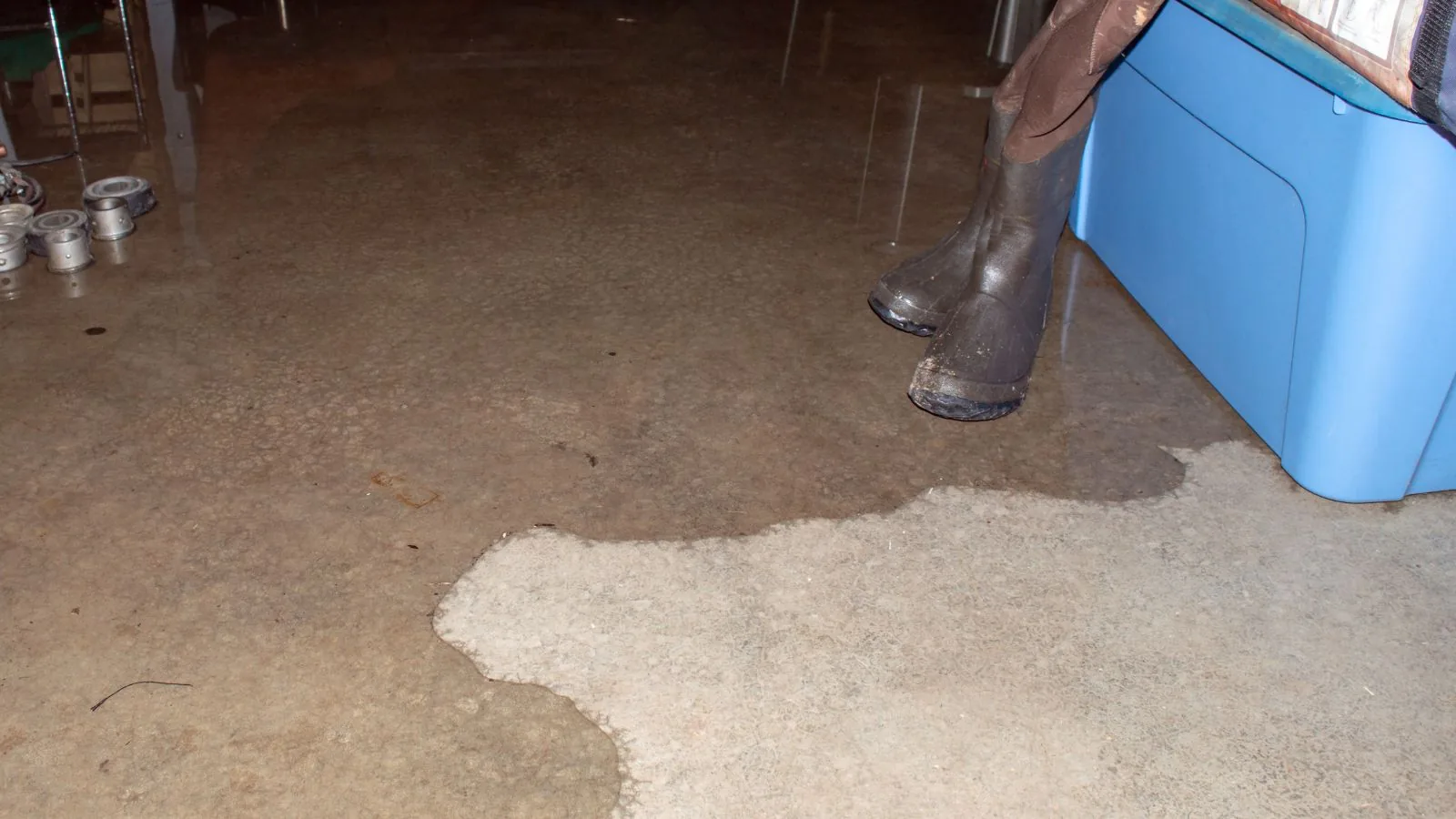
Basement water damage cleanup is the removal of water from a below-grade room and the drying and repair of the floors, walls and contents it touched. A wet basement is an emergency, because water in a finished space soaks carpet, drywall and stored belongings quickly.
The 24/7 line is open overnight and on weekends. Until help arrives, stay off the stairs if the water is near the panel or outlets, and if the water source is a pipe, shut off the main valve first.
When a wet basement is an emergency
A dry basement with a damp spot on the wall is a maintenance issue. A basement with standing water is an emergency, and so is one where the water level is rising during a storm. The situations that need a call right away include:
- Water over the floor and still coming in.
- A sump pump that stopped or cannot keep up.
- Water near the furnace, water heater or electrical panel.
- Wet carpet, wet finished walls or stored items sitting in water.
- A musty smell that shows up within a day or two of a leak.
If the panel or outlets are wet, do not enter. Call 911 or your electric utility first, then call the restoration line.
Why Medford basements get wet
Medford includes older subdivisions such as Eagle Estates, laid out in 1963 east of NY 112 on Horse Block Road, and a home of that age that has a basement is exposed to the problems below, especially if the basement is finished.
The soil around them is sandy and drains quickly, but a long wet spell can raise the water table, and a heavy storm can overwhelm a sump pit that has no backup power. Water also arrives from inside the house when a supply line splits, a water heater fails or a washing machine hose lets go.
The practical question is which source you have, because it decides the fix. Clean supply water from a pipe is handled differently from groundwater, and either is different from a sewer backup, which is covered on the sewage backup cleanup page. Say what you saw when you call, such as where the water entered and what color it was.
What cleanup involves
Crews check for electrical hazards, then pump out the water and move belongings to dry areas. Wet carpet and pad are usually removed, and saturated drywall is cut out to a line above the water mark. Hard floors and concrete are cleaned and dried in place.
After that, equipment goes in. Air movers push air across the floor and lower walls, and dehumidifiers remove moisture from the room. Because basements have little natural airflow, drying often takes longer than the same loss on an upper floor. The structural drying page describes how readings are used to decide when it is finished.
A note on waterproofing
Restoration is not waterproofing. Cleanup puts the basement back to a dry, usable state after a water event. It does not fix a cracked foundation, regrade a yard or install drainage. If water keeps returning, a waterproofing or drainage specialist or a plumber is the right next call, and the cleanup should be finished first.
Finished basement versus unfinished basement
| Basement type | What is at risk | Typical response |
|---|---|---|
| Unfinished with a concrete floor | Stored boxes, furnace, water heater, sill plate | Extraction, cleaning, drying, move contents |
| Finished with carpet | Carpet, pad, baseboards, lower drywall | Extraction, remove pad, cut drywall, dry framing |
| Finished with laminate or vinyl plank | Floating floor and subfloor | Lift planks to dry beneath or replace |
| Finished with drywall ceiling below a bathroom | Ceiling and insulation | Open the ceiling, dry the cavity |
If the water came through the ceiling from above, the ceiling water damage page covers the repair. If it was a heater, the water heater leak cleanup page covers that source.
What affects the cost of basement cleanup
Water category
Clean water from a pipe is simplest, groundwater and sewage need extra care.
Depth and duration
Water that sat for several days soaks further into framing and drywall.
Finish level
A finished basement has more to remove and rebuild than a bare one.
Drying days
Poor airflow underground makes drying longer than on a main floor.
Rebuild
Drywall, flooring and paint come after the structure is dry and are priced separately.
Insurance often treats a sudden pipe or appliance failure differently from groundwater seepage, and some policies need a water backup endorsement, so check your policy and ask your insurer. Want your real number? Call (833) 521-1033 and describe the basement.
Basement taking on water?
Call the 24/7 line now. Do not wade in if the panel or outlets are wet.
Basement drying follows the ANSI/IICRC S500 standard for water damage restoration.
Basement water FAQ
Do you handle basement water emergencies at night or on weekends in Medford?
Yes. The line is available 24/7, including overnight, weekends and holidays. Call and describe where the water entered and how deep it is.
Will cleanup stop my basement from flooding again?
No. Restoration dries and repairs what the water damaged. Preventing a repeat means fixing the cause, which can be a failed sump pump, drainage or a plumbing issue.
Is a finished basement always a total loss?
Not always. Hard floors and concrete can often be dried, while carpet pad and saturated drywall usually come out. Moisture readings decide.
How soon can mold start in a wet basement?
Mold can begin on damp materials in a few days, so removal and drying should start quickly. The mold remediation page covers what to do if growth has already appeared.
Do you cover Yaphank, Patchogue and Holtsville basements too?
Yes. The line serves Medford and the nearby towns of Holtsville, Yaphank, Patchogue, Middle Island and Blue Point.