
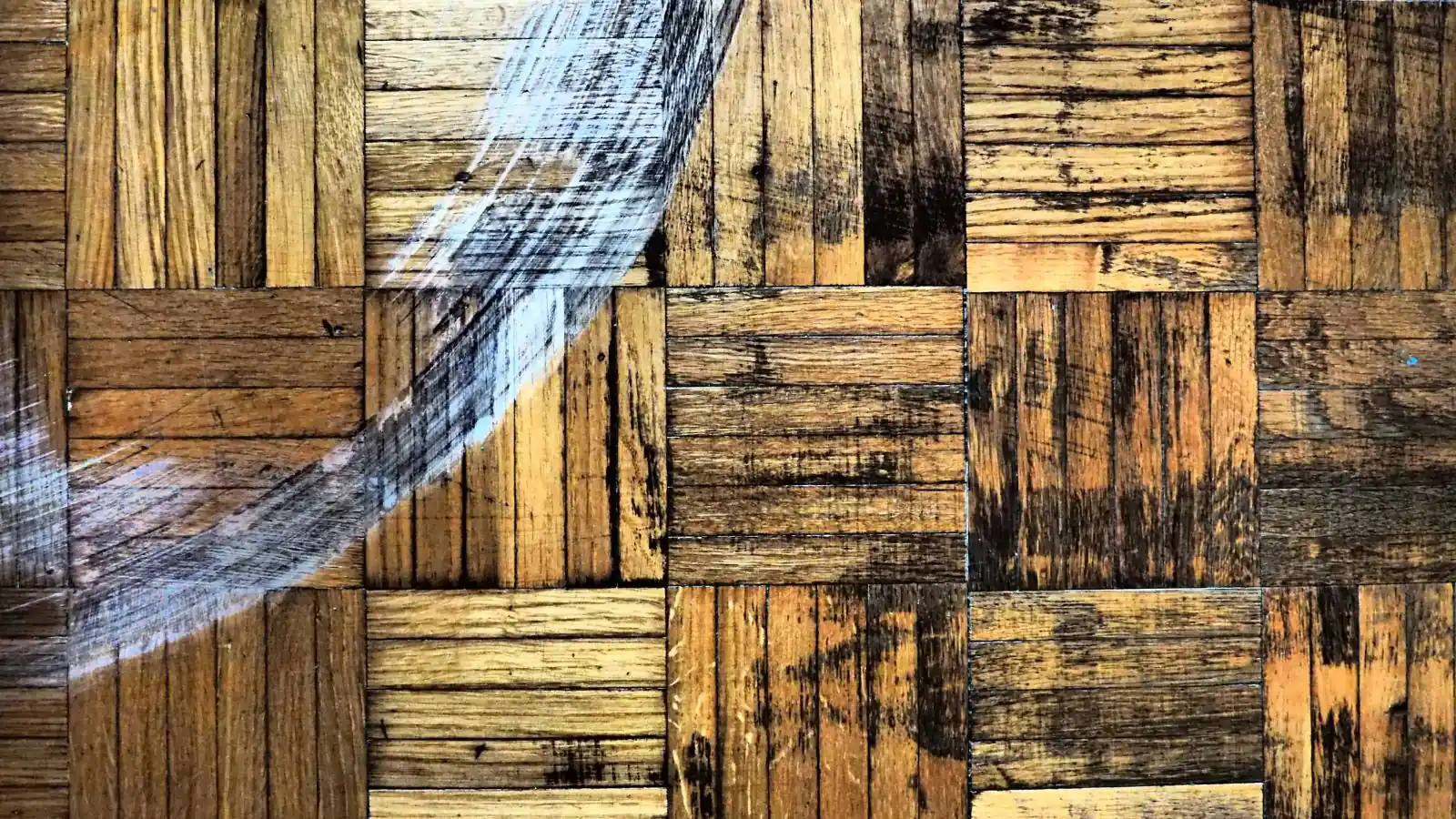
Hardwood floor water damage repair covers the drying, and where needed the sanding, refinishing or replacement, of wood floors after a leak or flood. Wood absorbs water and swells, so the first move is to remove water from the surface and from under the boards.
The 24/7 line is open any hour. Until help arrives, mop up standing water, lift rugs and furniture and keep the room ventilated, and do not use heat to speed drying, which can crack the boards.
What water does to wood floors
Solid and engineered wood take on moisture through the surface, the edges and the underside. As the boards absorb water, they swell, and the way they swell tells you what happened. Edges that rise higher than the center are called cupping. A center that rises above the edges is crowning. Boards that lift off the subfloor and gap are buckling, which is the most serious.
Cupping usually appears when moisture comes from below or when water stands on the floor, and it can take days to show. A floor that looks fine the night of a leak can cup by the end of the week. If the floor feels soft or looks stained, call the line before the weekend passes.
Solid, engineered and laminate
| Floor type | What water does | Often possible |
|---|---|---|
| Solid hardwood | Swells, cups, may buckle | Drying in place, then sanding and refinishing |
| Engineered hardwood | Layers can delaminate | Drying if caught early, otherwise replacement |
| Laminate | Core swells and edges lift | Usually replaced |
| Parquet | Squares loosen and cup | Dry and re-glue some, replace others |
| Floors over slab | Moisture from below | Slab moisture test before rebuilding |
Laminate and some vinyl plank are not hardwood, but the questions are the same. The call is made with moisture meters, not just by how the floor looks.
Drying wood floors
Check moisture
Meters read the boards and subfloor to find how wet they are.
Dry with controlled airflow
Special mats and low-speed air movers can pull moisture up through the boards, along with dehumidifiers.
Monitor
Readings are logged daily until the boards reach the dry standard for the species and the room.
Decide: refinish or replace
Floors that return flat can be sanded and refinished, and floors that stay cupped or buckled are replaced.
Drying must be slow and controlled. Drying too fast can split boards, and the target is the moisture level the floor had before the loss. The structural drying page describes how that target is set and tracked.
Water from below
Many wood floor problems start underneath. A leak in a crawl space or a basement ceiling, a slab that is releasing moisture and a failing appliance can all wet the floor from the bottom up. Check those sources before refinishing. The crawl space water damage page covers wet framing beneath a floor, and the slab leak page covers water coming up through concrete.
Medford floors
Hardwood and engineered wood are common in Medford living rooms, hallways and kitchens, and a leak in the kitchen or bathroom often reaches the hallway floor. If you have a floor over a finished basement ceiling, the water that wets the floor often shows in the ceiling below. Look for both. The kitchen water damage page covers the cabinet and sink side of that same loss.
When a floor cannot be saved
A floor that has buckled, that has soaked for a long time or that was wet with contaminated water is usually replaced. Boards that have rotted or grown mold at the underside cannot be fixed by drying. Replacement should wait until the subfloor reads dry, or the new floor will fail the same way.
What affects the cost
Floor type
Solid wood can be refinished, while engineered and laminate usually cannot.
Time wet
Boards wet for days are more likely to be replaced.
Area
The number of rooms and the continuity of the floor, since a repair must blend.
Subfloor
Wet subfloor must be dried before any finish work.
Finish
Sanding, staining and sealing are priced after drying.
Coverage depends on the cause, so check your policy and ask your insurer. Want your real number? Call (833) 521-1033.
Hardwood floor wet or lifting?
Call the 24/7 line and describe the boards and the source.
Controlled drying of wood floors follows the ANSI/IICRC S500 standard for water damage restoration.
Hardwood floor water damage FAQ
Do you handle wet floor emergencies at night or on weekends in Medford?
Yes. The line is available 24/7, including overnight, weekends and holidays. Call and say what type of floor it is and how long it has been wet.
Will a cupped floor flatten on its own?
Sometimes, if the moisture source is fixed and the floor dries slowly. Others stay distorted. Moisture readings over several weeks show which.
Can I sand it right away?
No. Sanding wet or cupped boards can leave them flat when wet and cupped when dry. Wait until the floor reaches its dry standard.
Is laminate the same as hardwood?
Not for water. Laminate has a fiberboard core that swells and does not return, so it is usually replaced.
Do you serve the towns around Medford?
Yes. Calls come from Holtsville, Yaphank, Patchogue, Middle Island and Blue Point.