
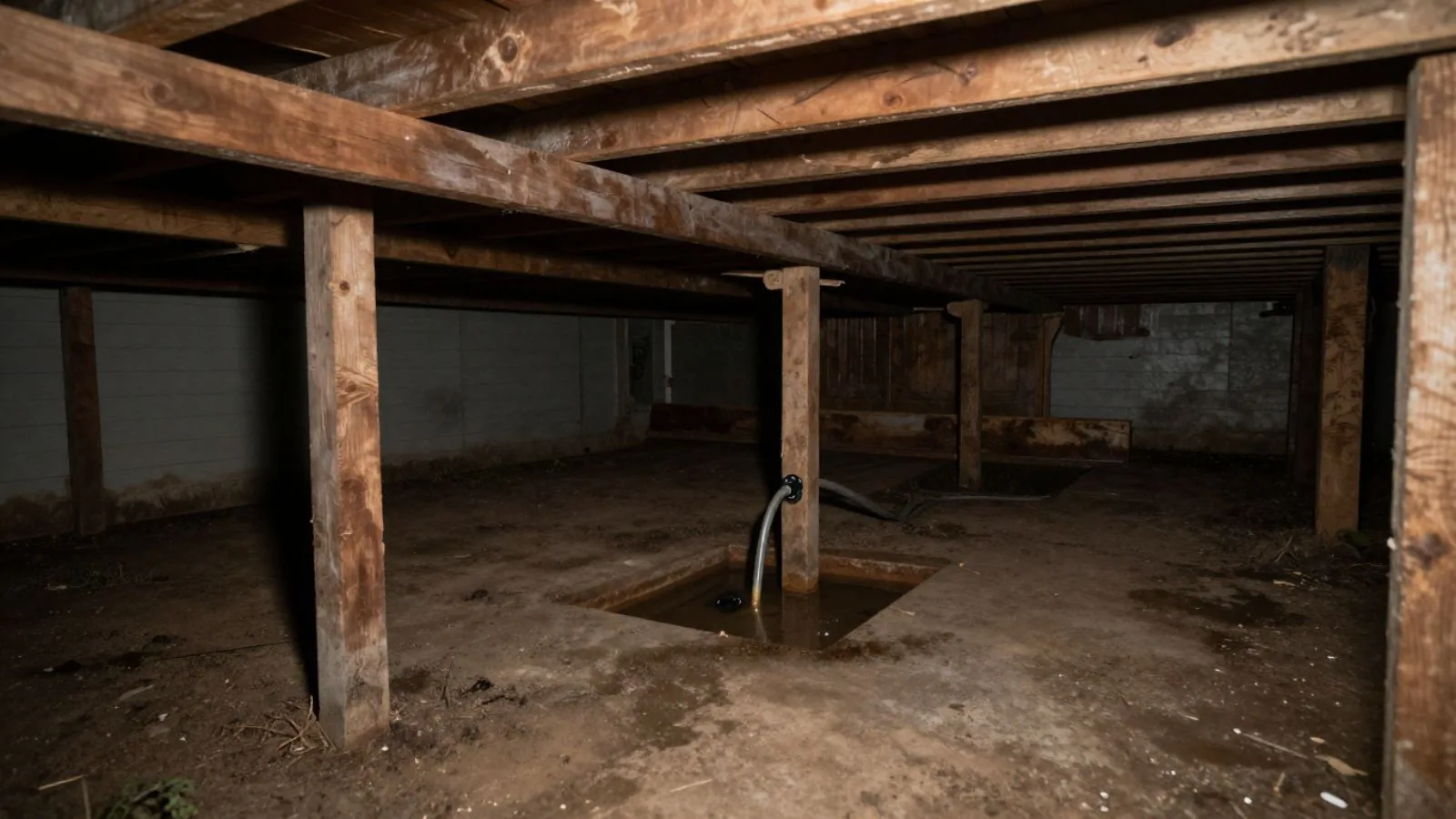
Crawl space water damage cleanup is the removal of water from the shallow void under a floor and the drying of the joists, subfloor, insulation and vapor barrier it wetted. A crawl space is hard to see into, so the first sign is often a cold floor, a musty smell or a spongy spot above it.
The 24/7 line takes calls at any hour. Do not enter a crawl space with standing water near wiring, and if the space smells of sewage or gas, leave it alone and call the utility.
What happens under the floor
A crawl space is a small, enclosed area with limited airflow. Water can come from a pipe, from the ground after heavy rain, from a plumbing drain or from groundwater. Once there, it wets the soil, the joists and the underside of the subfloor, and it humidifies the air, so nearby wood and insulation absorb the moisture.
Insulation is a particular problem. Fiberglass batts hold water, sag and stay wet against the subfloor, which keeps the wood damp. Sagging insulation or a floor that feels cold and soft are warning signs.
Do Medford homes have crawl spaces?
It depends on the house. Many Long Island homes sit on full basements or on slabs, but crawl spaces are found under additions, older sections and some ranch homes. Check your property records or look at the foundation from the outside. If you have a crawl space, the sections below apply.
This is why the page states the mechanism and not a local frequency. A crawl space on sandy Suffolk County soil can still collect water if a supply line fails above it, a drain leaks or the water table rises after a long wet spell. FEMA's Flood Map Service Center and the Town of Brookhaven can tell you whether your address has exposure.
Signs of a wet crawl space
- A musty or earthy smell in the house.
- A floor that is cold, soft or squeaky.
- Standing water or damp soil seen through the access hatch.
- Sagging or dark insulation.
- Visible mold on joists or the vapor barrier.
Because the space is out of sight, water can sit for weeks. Look with a flashlight from the access point and check for wiring and ducts that may be wet.
How the cleanup works
Make safe
Check for electrical hazards and stop any plumbing source. A plumber fixes the pipe.
Remove standing water
A small submersible pump and extraction equipment clear the space. See water extraction.
Remove wet insulation and debris
Sagging insulation, damaged vapor barrier and loose debris are removed.
Restore
Insulation and the vapor barrier are replaced, and the floor above is repaired.
Crews work in tight spaces and wear protective gear. If the floor above is wood, the hardwood floor page covers drying the surface. If the water came from the basement side of a combined foundation, see basement water damage.
Moisture control after the cleanup
Cleanup does not make the space dry forever. Keeping a crawl space dry means fixing what let the water in, such as a downspout that discharges at the foundation, a plumbing leak or grading. Vapor barriers, vents and dehumidification are building decisions made by a contractor, not part of restoration.
If mold has formed on the framing, the mold remediation page explains the process. Do not seal or encapsulate a wet crawl space, because that traps moisture in the wood.
What affects the cost
Water depth and source
Clean supply water is simpler than groundwater or sewage.
Access
Tight, low spaces slow the work and need special equipment.
Insulation and barrier
Removing and replacing insulation adds scope.
Drying days
Low airflow slows drying under a floor.
Rebuild
Subfloor, flooring and insulation are priced after drying.
Coverage depends on the cause, since a pipe failure is treated differently from groundwater, so check your policy and ask your insurer. Want your real number? Call (833) 521-1033.
Water under the floor?
Call the 24/7 line and describe the space and the smell.
Crawl space drying follows the ANSI/IICRC S500 standard for water damage restoration.
Crawl space water FAQ
Do you handle crawl space water at night or on weekends in Medford?
Yes. The line is available 24/7, including overnight, weekends and holidays. Call if water is under your home.
Is it safe to go in myself?
Only if you can confirm no wiring is in the water and the air is safe. Standing water, odor or tight spaces call for a professional.
Does the insulation have to be replaced?
Wet fiberglass batts that sag usually come out. The subfloor and joists are dried and checked.
Will encapsulation fix the problem?
Encapsulation is a building decision about long-term moisture. It does not replace cleanup, and it should not be done over wet wood.
Do you serve the towns near Medford?
Yes. Calls come from Holtsville, Yaphank, Patchogue, Middle Island and Blue Point.