
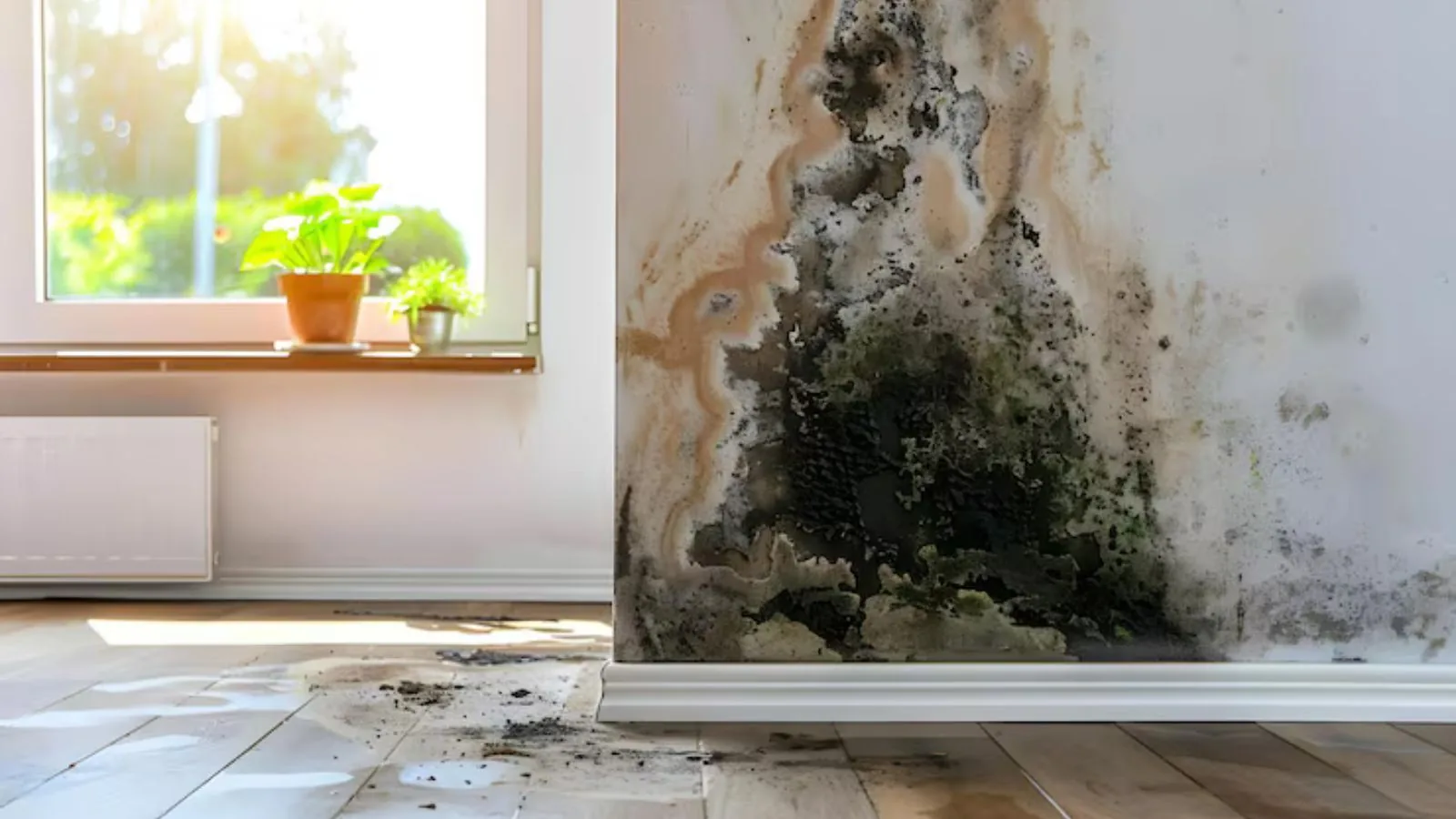
Mildew and mold are both fungi that grow in damp places, and the words overlap in everyday use. Mildew usually refers to flat, powdery or downy growth on the surface of a material, often white or gray. Mold is a broader term and tends to be fuzzier, thicker and more colorful, and it can grow into porous materials.
You cannot always tell them apart by eye, and the more useful question is how much there is and what it is growing on. This guide covers the signs and the response.
How they usually look
| Feature | Mildew | Mold |
|---|---|---|
| Texture | Flat, powdery or downy | Fuzzy, slimy or raised |
| Color | White, gray, sometimes yellow | Green, black, blue, white and others |
| Where | Surface of showers, windows, damp fabric | Wall, ceiling, wood, carpet, insulation |
| Depth | Stays on the surface | Can grow into porous material |
| Smell | Mild musty smell | Stronger musty or earthy smell |
These are patterns, not rules. Color is not a reliable way to identify a type of mold, and a person cannot tell the species by looking. If you are unsure, treat any growth as a sign of moisture and check the cause.
Where each tends to show up
Mildew is common on bathroom tile, shower curtains, window sills and damp laundry, places where moisture and warmth meet on a hard surface. Mold more often appears after a leak or flood, on drywall, ceilings, wood framing, carpet and insulation. A shower that has a gray film is a different matter from a basement wall with fuzzy patches after a pipe leak.
What to do about each
Small surface growth on a hard, non-porous surface can often be cleaned with detergent and water, and then the area is dried. Improve ventilation with a bath fan or open window, and fix any source of damp. Do not mix cleaning products, since some combinations make dangerous fumes.
For growth on drywall, ceiling tile, carpet or insulation, cleaning the surface does not solve the problem, because the material is porous. It usually needs removal, and large areas should be handled through the process on the mold remediation page. If growth covers a large area or you are unsure, a licensed assessor can evaluate it.
Moisture is the common factor
Both mold and mildew need moisture. Wiping them off without fixing the source means they come back. The structural drying page explains how wet materials are dried to a standard, and the wall and drywall page explains what happens when a wall has been wet.
If you see growth after a known leak, stop the water first and treat the situation as water damage. Health questions about exposure belong to a physician, and this guide does not give medical advice.
A Medford note on bathrooms and basements
Long Island has humid summers, and bathrooms, laundry rooms and basements are the places where mildew shows up first. A bath fan that vents outdoors, a dehumidifier in a damp basement and a clean dryer vent all lower the moisture that growth needs. Check that fans vent outside and not into an attic.
In New York, mold assessment and remediation on larger projects fall under the State Department of Labor's mold program, which licenses assessors and remediators. A small area of surface mildew is a household cleaning matter, and a large area of mold in a wall is not. When in doubt, ask a licensed assessor.
Persistent growth in a basement often means a deeper moisture problem, and the basement water damage page explains why. A slow leak in a bathroom wall is covered on the burst pipe page. The same signs appear in Holtsville and Yaphank.
A quick way to decide
- Is it on a hard surface and small? Clean, dry and ventilate.
- Is it on drywall, carpet or insulation? Plan for removal and find the moisture.
- Is it large, or did it follow a leak? Stop the water and get it assessed.
- Does it keep coming back? Look for a hidden source.
Prevention in everyday rooms
Most surface growth is a ventilation problem. Run the bath fan during showers and for a while afterward, wipe down wet tile and glass, and do not leave damp towels or laundry in a pile. Keep furniture a little away from exterior walls so air can move behind it.
In basements and closets, keep stored items off the floor and away from the walls. If a room always feels damp, a dehumidifier helps, but a persistent damp wall points to a leak or a drainage problem that equipment alone will not fix.
Watch for the places people forget. The back of a vanity, the area under a kitchen sink and the wall behind a washing machine often hold moisture for a long time before anyone notices. A quick look and sniff every few months catches a slow leak early, when the repair is small.
Mold vs mildew FAQ
Is mildew less serious than mold?
Surface mildew on a hard surface is usually a cleaning job. The seriousness depends on how much there is, what it grows on and the moisture source.
Can I tell the type by color?
No. Color is not a reliable guide, and species cannot be identified by eye.
Can I clean mold on drywall?
Surface cleaning does not solve growth in porous materials. Affected drywall usually needs removal.
Why does it keep coming back?
Moisture is still present. Fix the source and dry the area.
Where do I take health questions?
To a physician. This site does not give medical advice.