
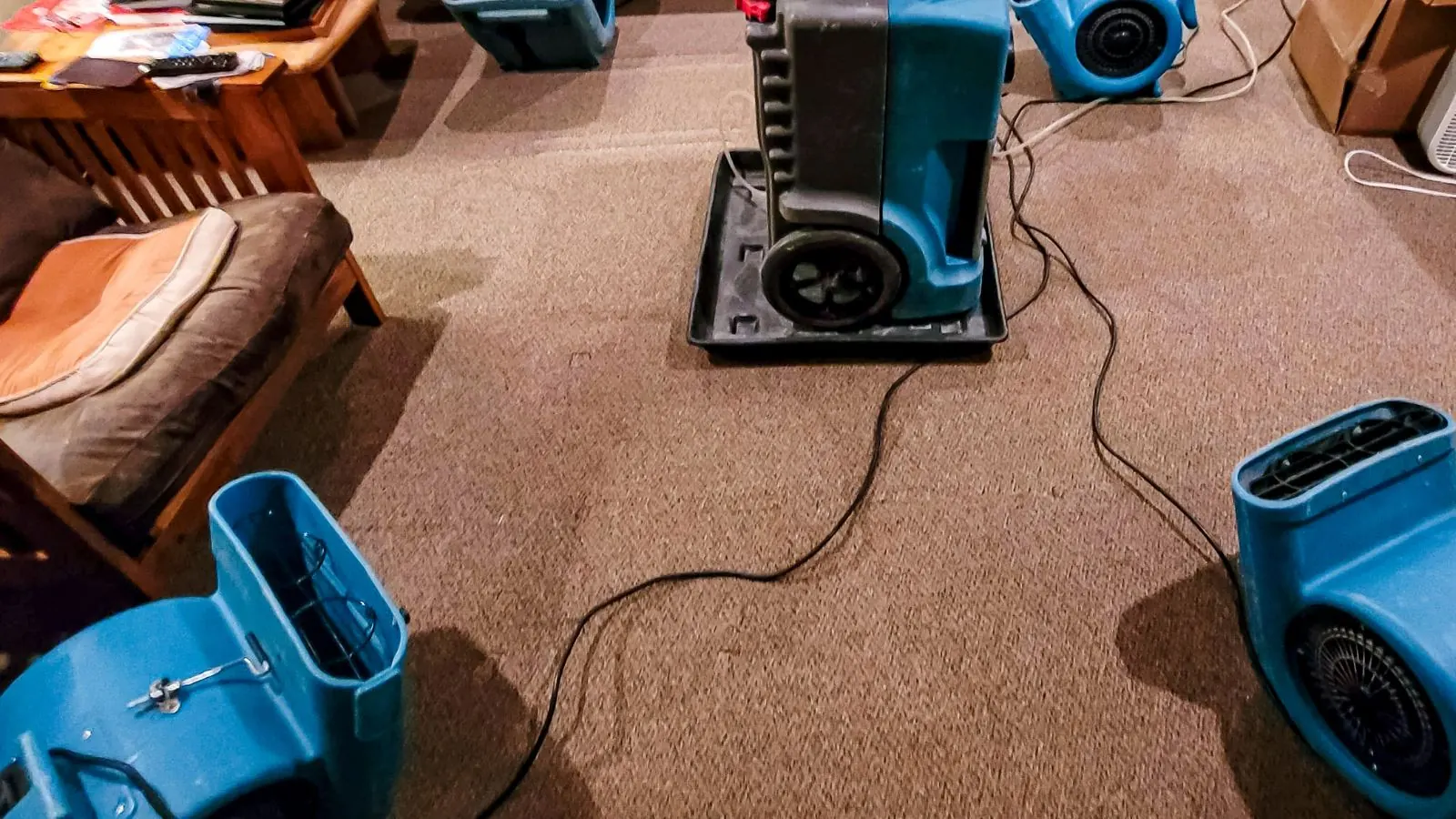
How long water damage takes to dry depends on how much water got in, what it soaked into, how humid the air is and how much drying equipment is working. A small clean spill on a hard floor can dry in a day or two.
A wall cavity, a subfloor or a hardwood floor can take longer, and a slab longer still. The only reliable answer comes from moisture readings, and a professional drying job is finished when readings reach target, not when a set number of days has passed.
What sets the timeline
| Factor | How it affects drying |
|---|---|
| Amount of water | More water in more materials takes longer to remove |
| Material | Thin drywall dries faster than hardwood, plaster or concrete |
| Water category | Contaminated water means removal, which changes the work |
| Time before drying starts | Water that sat for days soaks deeper |
| Humidity and temperature | Humid or cold conditions slow evaporation |
| Airflow | Moving air carries moisture off wet surfaces |
| Dehumidification | Removing moisture from the air keeps drying going |
| Access | Closed cavities and layered floors dry slowly |
Several of these are within your control. The most important is time. Extraction and drying that start within hours limit how far the water spreads. The next most important is conditions, which is why drying companies close up the space and run dehumidifiers instead of opening windows.
How drying actually works
Wet materials release moisture into the air as vapor. Air movers push air across wet surfaces so the vapor is carried away. Dehumidifiers pull the vapor out of the air so it does not saturate. As long as the air can take more moisture, the materials keep drying. The structural drying page explains the equipment and how it is placed.
Technicians take readings with moisture meters on the same spots each day. The numbers fall over time, and the trend shows when materials are close to their dry standard. A reading of a dry reference material in the same building sets the target. When all the readings reach it, drying is done.
Rough expectations by situation
These are not promises. They are the way situations tend to compare.
- A small clean-water spill on tile or sealed floor: hours to a day or two.
- Wet carpet with the pad removed over a wood subfloor: a few days.
- Saturated drywall and insulation in a wall cavity: several days, sometimes longer.
- A hardwood floor wet from above or below: days to weeks, with slow, controlled drying.
- A concrete slab: longer than wood or drywall, because it holds moisture.
If someone tells you a precise number before seeing the water, ask what they are basing it on.
When drying has stopped working
If readings stop falling, something is wrong. A hidden wet area, a leak that is still active, a closed cavity that the air cannot reach or equipment that is not matched to the space can all stall drying. The fix is to find the cause, and a log with daily readings is what shows the stall. It can mean opening a wall, moving equipment or adding a dehumidifier.
A Medford note on seasons and drying
Long Island summers are humid, and humid outside air is a poor drying partner. A restoration company will usually keep the structure closed and rely on dehumidifiers, which means the house may feel warm and stuffy while drying runs. In winter, the air is dry but walls and floors are cold, and cold surfaces release moisture slowly, so heat is balanced against drying.
The National Weather Service office serving the area publishes climate normals for temperature and humidity, and you can look up a figure for your own planning. This guide does not rely on one. The point is that Medford's seasons matter to drying, so tell the company what the weather and the house are doing.
Drying times differ by loss. The basement water damage page explains why basements dry slowly, and the hardwood floor page explains why wood needs careful drying. The same principles apply in Yaphank and Middle Island.
What helps drying go faster
- Start extraction and drying as soon as the water is stopped.
- Keep the space closed and the thermostat steady while equipment runs.
- Remove materials that cannot dry, such as saturated pad and insulation.
- Do not turn equipment off early because the room feels dry.
- Ask for the log of readings and watch the trend.
What to ask for at the end
Before equipment is picked up, ask for the final readings and the drying log. The log should show the starting readings, the daily trend and the final numbers against the dry standard. Those pages are your record that the job was finished properly, and they are what an insurer or a future buyer may ask to see.
How long drying takes FAQ
How many days will my walls take to dry?
It varies. Thin drywall may dry in a few days, and thicker materials or closed cavities can take longer. Moisture readings decide.
How do I know the drying is finished?
When readings in each material reach the dry standard, measured against a dry reference in the same building.
Can I speed it up with fans?
Fans help on small, open spills. For wall cavities and subfloors, equipment and monitoring are needed.
Does Medford's humidity slow drying?
In summer it can, which is why dehumidifiers and a closed space are used instead of open windows.
Why is the equipment loud?
Air movers and dehumidifiers run continuously for days. The noise is part of drying, and the log shows progress.